RFID tags are used in many everyday systems, from access cards and key fobs to warehouse labels, laundry tags, apparel tags, livestock ear tags, and product packaging. As more businesses use RFID for identification and tracking, RFID cloning has become a common concern, and one question comes up often: can an RFID tag be copied? The answer depends on the type of tag, the data stored on it, and how the RFID system verifies that tag when it is scanned.
What Is RFID Cloning?
RFID cloning means duplicating the identity that an RFID system uses to recognize a tag, card, or key fob. During a normal scan, the RFID reader sends out a radio signal. The tag antenna receives energy from that signal, the chip wakes up, and the tag returns data to the reader.
The returned data may be a card number, UID, EPC, NDEF record, user memory, or credential value. RFID cloning works by taking the data that the system trusts and making another tag, card, key fob, or emulator present that same data during a scan. If the reader and software only check that copied value, the copied tag may be treated as the original.
A clone does not always need to copy every part of the chip. In many weak systems, copying the visible identifier is enough because the software only matches that identifier to a record. In stronger systems, the reader or backend may also check chip-level data, protected memory, passwords, or authentication responses. In that case, copying the readable data alone may not create a working clone.
However, RFID cloning is different from normal RFID encoding. Encoding writes approved data to new tags for a real project, such as apparel tracking, laundry management, asset tracking, livestock identification, or warehouse inventory. Cloning reuses an existing tag identity, so two tags may point to the same record in the system.
Can You Copy An RFID Tag?

Yes, some RFID tags can be copied, especially older or low-security tags that return a fixed ID without encryption, authentication, or protected memory. The easier a tag is to read and repeat, the easier it is to clone. Secure RFID tags are different. They do not rely only on a static number, so copying visible data is not enough.
Basic 125 kHz Access Cards And Key Fobs
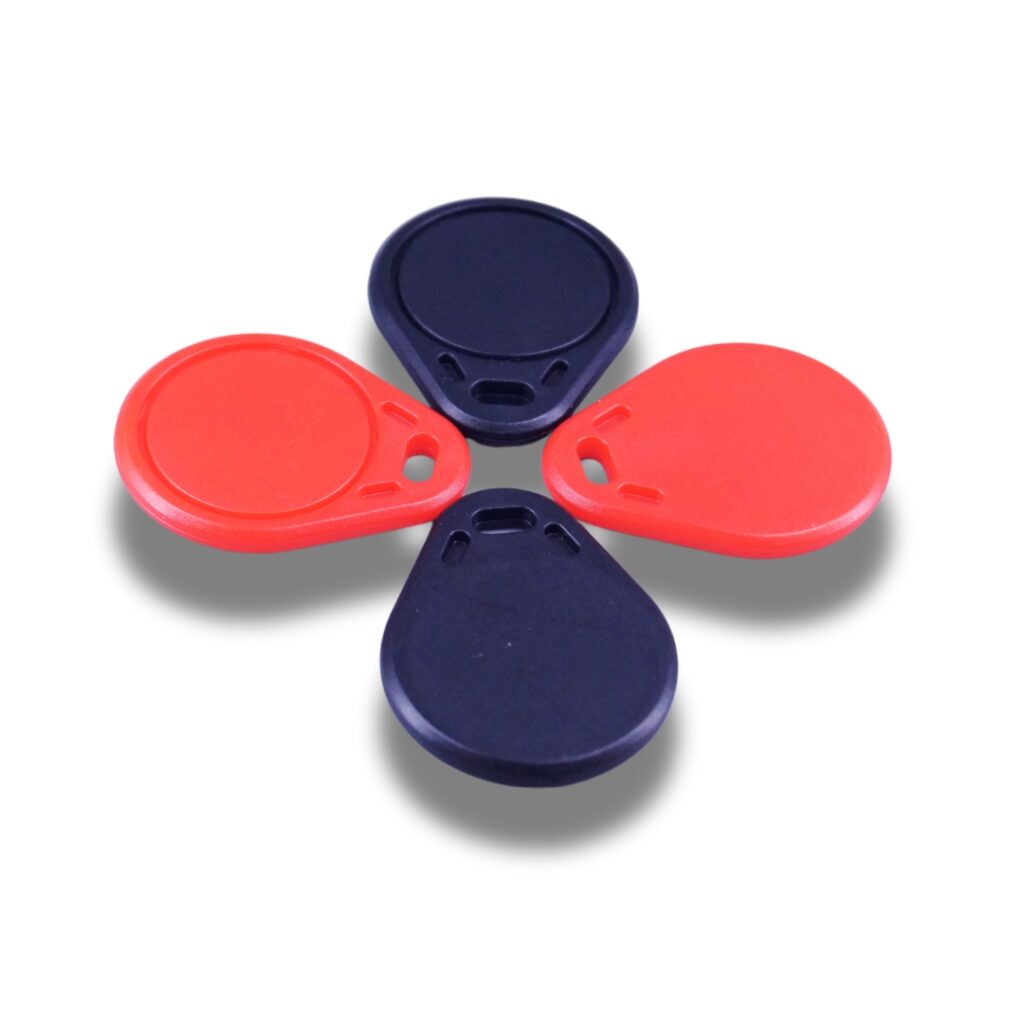
Basic 125 kHz access cards and key fobs (like old door cards, parking fobs, gym cards, and low-security employee badges) are among the easiest RFID credentials to copy. Many older proximity cards use fixed-ID chips, such as EM4100-style chips, that return the same card value every time they are scanned.
These cards do not authenticate themselves to the reader. They only present an ID. If the access system trusts that ID alone, another compatible card, fob, or emulator may be able to present the same value.
Older Or Weakly Configured HF And NFC Cards
HF and NFC cards at 13.56 MHz can be more secure than simple 125 kHz cards, but the frequency alone does not make them safe.
Some older HF cards use memory sectors and access keys. If the system uses weak keys, default keys, or poor card configuration, protected areas may not be well protected in real use. MIFARE Classic-type cards are a common example in cloning discussions because many weak deployments depended on sector keys that were not managed properly.
A better HF access card should use stronger authentication, protected keys, and secure reader-card communication. DESFire-type credentials are a stronger option because they are built for authentication instead of simple fixed-ID reading.
Basic NFC Tags With Public Content
Basic NFC tags are often used for URLs, product pages, menus, instructions, packaging links, and marketing content. These tags usually store public NDEF data that a phone is meant to read.
If an NFC tag only stores a plain URL or text record, that content can be written to another NFC tag. This is content copying, not secure authentication.
Basic NFC tags are useful for product interaction, but they should not be used as the only anti-counterfeit layer. A copied URL can look the same to the user unless the backend also checks whether the tag itself is genuine.
Standard UHF RFID Labels For Tracking
Standard UHF RFID labels are built for fast item identification. They are widely used for apparel, cartons, warehouse stock, documents, and asset labels.
In many projects, the main value is the EPC. If the system only uses the EPC as the item identity, another UHF tag with the same EPC can create a duplicate identity.
However, not every UHF tag is fully cloned. A UHF chip may also have TID memory, passwords, locked memory, or user memory, depending on the chip and project setup. For simple inventory, EPC tracking may be enough. For high-value assets or product verification, EPC alone is not a strong proof of originality.
Rewritable Or Test RFID Tags
Rewritable RFID cards and test tags are made for development, reader testing, and system setup. Their job is to be flexible.
They are not a good choice for secure access, anti-counterfeit labels, or controlled product identity. A production tag should be selected for the final use case, then encoded, locked, or protected as needed.
Secure RFID And NFC Authentication Tags
Secure RFID and NFC authentication tags are harder to clone because they do not only return a fixed value. They can use protected keys, encrypted communication, mutual authentication, or dynamic authentication messages.
In a challenge-response design, the reader sends a challenge. The chip calculates a valid response using a secret stored inside the chip. The secret is not exposed during normal scanning. Copying the visible communication does not give another tag the same ability to prove itself.
Secure NFC authentication tags, such as chips with AES-based authentication and dynamic tap data, are better suited for anti-counterfeit packaging, high-value product verification, certificates, secure consumables, and brand protection. They cost more than basic tracking tags because they solve a different problem.
What Does The RFID System Verify?
Whether a copied RFID tag works depends on what the reader and software choose to trust. Some systems only check one visible value. Others compare several parts of the tag record or ask the chip to prove itself before accepting the scan.
A Static ID
The weakest systems check only a static ID, such as a card number, serial number, EPC (Electronic Product Code), UID (Unique Identifier), or basic credential value. The reader scans the tag and sends that value to the software. If the value exists in the database, the tag is accepted.
Therefore, old fixed-ID cards and simple tracking tags carry higher cloning risk. Once the same value appears on another tag, the system has very little else to compare.
EPC And TID (Tag Identifier)
For UHF RFID projects, EPC is often the working item number. It may be used to identify a garment, carton, tool, document, or asset. EPC memory is useful because it can be encoded for the project.
TID adds a stronger check. It is not a normal project number written during encoding, but an identity data set at the chip level. When the software stores both EPC and TID, it can compare the item identity with the chip identity during scanning.
If another tag carries the same EPC but has a different TID, the system can mark it as a mismatch. This does not make a standard UHF label the same as a cryptographic security tag, but it reduces the risk of simple EPC duplication.
Memory Locking And Passwords
Some RFID projects verify whether the tag memory is still in the expected state. After encoding, EPC memory or user memory can be locked, depending on the chip and project setup. Some chips also support access passwords, kill passwords, or password-controlled memory areas.
These settings help protect the production data after the tag leaves the factory. A tag with freely writable memory is easier to alter. A tag that has been encoded, locked, and managed correctly gives the system more control over the tag record.
Authentication Response
Secure RFID and NFC systems may require the tag to return more than stored data. The reader can send a challenge, and the chip must calculate a valid response using a protected key inside the chip.
The key point is that the protected key is not exposed during a normal scan. A copied card number, EPC, URL, or UID cannot create the right response by itself. This is why secure access cards and authentication NFC tags are much harder to clone than basic fixed-ID tags.
Backend Behavior
The backend system can also check how the tag is being used. It can flag the same tag identity appearing in two places too close together, a tag moving through an impossible route, a retired tag appearing again, or a product authentication tag being scanned too many times from unrelated locations.
This layer is especially useful when the tag itself is used in large numbers, such as apparel, logistics, asset tracking, or product authentication. The chip helps identify the item. The software decides whether the scan makes sense.
How To Reduce RFID Cloning Risk
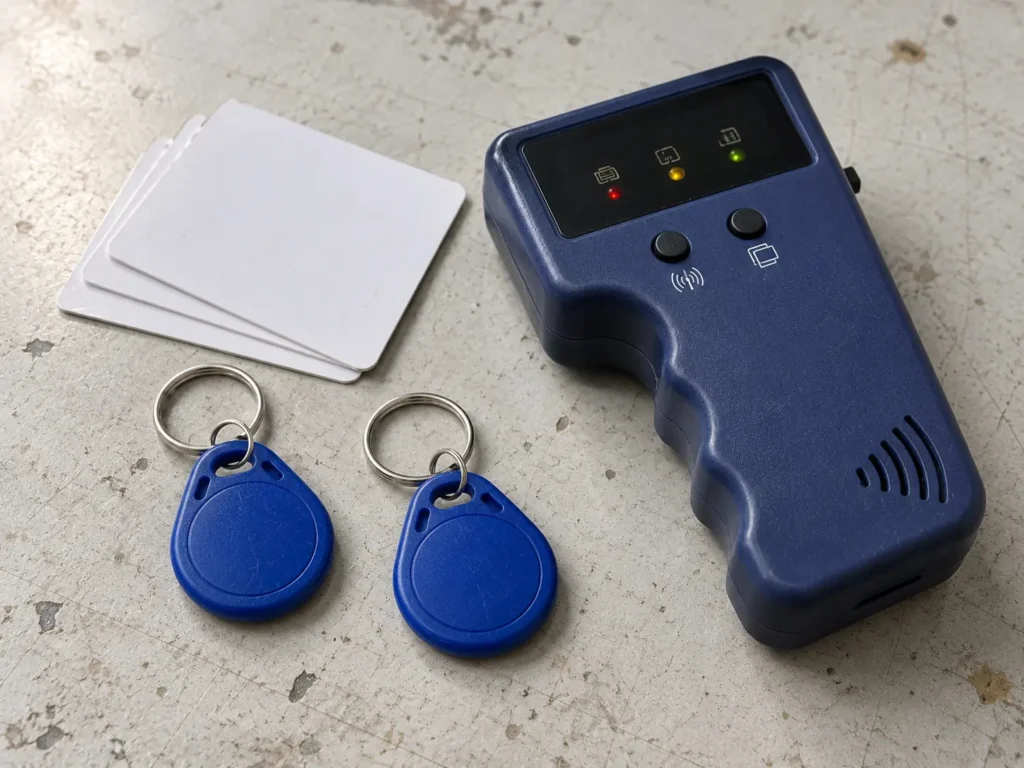
The best way to reduce RFID cloning risk is to avoid building the whole system around one readable tag number. A safer RFID project uses the right chip, protects the encoded data, and gives the reader or software more than one thing to verify before it trusts the tag.
Avoid Fixed-ID Tags For Sensitive Use
Fixed-ID tags are fine for simple identification, but they are a weak choice when the tag is expected to prove access, ownership, or authenticity. A card or fob that returns the same readable number every time gives the system very little to check.
For sensitive use, such as employee access, paid membership, high-value assets, or anti-counterfeit labels, the tag should not rely on a static ID alone. A stronger choice is a chip that supports protected memory, authentication, or another form of identity check beyond the visible number.
Choose The Chip Based On The Risk Level
Not every RFID project needs the same level of protection. A warehouse label used for basic inventory has different needs from a product authentication tag or an access credential.
For low-risk tracking, a standard RFID label may be enough if the goal is fast scanning and accurate item records. For controlled access, branded products, certificates, reusable containers, or expensive assets, the chip should offer stronger features such as locked memory, password-controlled access, unique chip identity, encrypted communication, or authentication support.
The chip choice should be made before production. It is much harder to fix a weak tag design after thousands of tags have already been encoded and shipped.
Lock Memory After Encoding
If the data should not change after production, memory locking should be part of the encoding plan. This is common in projects where each tag is tied to a fixed product, garment, asset, shipment, or document record.
In a UHF RFID project, EPC memory may hold the item number or asset identity. Once the data is encoded and checked, locking the memory can reduce casual rewriting and keep the tag record stable.
Memory locking does not turn a basic tag into a full security tag. It mainly protects the encoded data from being changed after production. For many tracking projects, that alone is still useful.
Match EPC With TID When Needed
For higher-value UHF RFID projects, the system can store both EPC and TID. EPC is the project identity written for the item. TID is chip-level identity data tied to the RFID chip.
This gives the system a stronger comparison. If another tag carries the same EPC but has a different TID, the software can treat it as a mismatch instead of accepting the scan without question.
EPC and TID matching is useful for assets, reusable containers, controlled inventory, and products where duplicate identities would create real loss. It should be planned before mass encoding, so the database can store the right tag information from the beginning.
Use Authentication Tags For Anti-Counterfeiting
Anti-counterfeit projects need more than a readable serial number or a public NFC link. A copied URL or visible tag ID may look convincing to a user, but it does not prove that the physical tag is genuine.
For product authentication, use RFID or NFC chips built for secure verification. These chips can use protected keys, encrypted data, or dynamic authentication messages. Instead of only returning a fixed value, the tag must produce a valid response that a copied basic tag cannot recreate.
This type of tag is a better fit for luxury goods, certificates, branded consumables, secure packaging, medical products, and other items where fake products create real business or safety risk.
Add Backend Rules For Suspicious Scans
The software should not accept every scan just because the tag number exists. It should also check whether the scan makes sense.
A stronger backend can flag duplicate tag identities, impossible movement, repeated scans from unrelated locations, retired tags, or products that appear in the wrong sales channel. For access systems, it can also check time, location, permission level, and failed scan patterns.
This is especially important when the tag itself is a standard tracking tag. The tag identifies the item, but the software decides whether the scan should be trusted.
Manage Tags Through Their Full Lifecycle
RFID cloning risk can grow when old tag records stay active too long. A lost access card, replaced asset tag, damaged laundry tag, or retired product label should not remain valid without control.
A clean lifecycle includes issuing, encoding, activation, replacement, suspension, and retirement. When a new tag replaces an old one, the old identity should be disabled or clearly marked in the system.
Good RFID security does not end when the tag leaves the factory. It depends on how the tag identity is managed during real use.
FAQs About RFID Cloning And Copying RFID Tags
Is RFID Cloning Illegal?
RFID cloning can be illegal when it is used to copy access cards, employee badges, payment credentials, hotel keys, membership cards, or any tag that you do not own or have permission to duplicate. Legal RFID work is different. Businesses can encode new tags, replace damaged tags, or issue duplicate tags inside their own system when they control the data and permission.
Can I Copy My Own RFID Tag For A Project?
You can duplicate or replace RFID tags for your own project when you own the system and have the right to manage the tag records. In that case, it is usually better to treat the new tag as a proper replacement, not a hidden clone. The old tag should be retired or marked in the software, and the new tag should be encoded and tested under your normal process.
How Do I Know If My RFID Tags Are Easy To Clone?
A tag is usually more exposed if it returns the same readable number every time and the system accepts that number alone. Older 125 kHz access cards, simple key fobs, public NFC tags, and basic tracking labels are common examples. If you do not know the chip type, frequency, memory settings, or whether the system checks anything beyond the visible ID, your current tags should be reviewed before they are used for security or product authentication.
Can A Phone Copy An RFID Tag?
A phone can read some NFC tags because NFC is a type of HF (High Frequency) RFID at 13.56 MHz. For example, a phone may read a public NFC tag that stores a URL or text record. A phone cannot read most LF (Low Frequency) 125 kHz cards or UHF (Ultra High Frequency) RFID labels without extra hardware. It also cannot simply copy a secure NFC authentication tag if the tag uses protected keys or dynamic authentication.
Can iPhones Copy RFID?
An iPhone is not a general RFID cloning tool. It can read some NFC (Near Field Communication) tags, especially NFC tags that use NDEF (NFC Data Exchange Format) data, such as a URL, text record, or product page link. It cannot read most 125 kHz key fobs or UHF RFID labels by itself because those use different RFID frequencies and require different reader hardware. Apple’s Core NFC framework is built around reading NFC tags, while Apple Wallet supports digital keys only when the lock, access system, or service provider supports that setup.
How Easy Is It To Duplicate A Fob?
It depends on the fob. Older 125 kHz fixed-ID key fobs are usually easier to duplicate because they often return the same static credential each time they are scanned. A secure fob is harder to copy because it may use encryption, protected memory, or authentication instead of a simple readable number. For businesses, the fob shape does not tell the full story. The real factors are the frequency, chip type, credential design, and what the access system verifies before opening the door.
How To Copy RFID Key Fob To iPhone?
In most cases, you cannot copy a normal RFID key fob directly to an iPhone. An apartment fob, office badge, parking fob, or 125 kHz access key cannot usually be scanned and saved to iPhone as a working key. The proper option is to use an access system that supports iPhone credentials, such as a supported digital key in Apple Wallet or a mobile access app provided by the building, hotel, campus, or lock system. Apple Wallet can store supported home keys, hotel keys, car keys, corporate badges, and student IDs, but they must be issued through a compatible system.
Are UHF RFID Tags Good For Anti-Counterfeiting?
UHF RFID tags are excellent for fast item tracking, warehouse scanning, apparel inventory, cartons, and asset management. They are not automatically anti-counterfeit tags. If the system only checks EPC (Electronic Product Code), a duplicate EPC can create confusion. For higher-value products, the system should add stronger checks, such as TID (Tag Identifier) matching, locked memory, controlled encoding, or a separate authentication layer.
What Should I Do If An RFID Card Or Tag Is Lost?
A lost RFID card or tag should be disabled in the system as soon as possible. Do not only issue a new tag and leave the old record active. For access cards, membership cards, asset tags, and reusable item tags, the software should show which tag is active, which tag was replaced, and which tag has been retired. This reduces the chance that an old tag, copied tag, or found tag can still be used.
Can RFID Cloning Be Detected?
Sometimes. A simple system that only checks one ID may not notice a copied tag. A stronger system can flag problems such as the same tag appearing in two places, a tag moving through an impossible route, repeated scans after retirement, or a product authentication tag being checked too many times from unrelated locations. Detection depends on the software rules, not only the tag.
How An RFID Tag Supplier Can Help
Choosing the right RFID tag is the first step to reducing cloning risk. At custom-rfid-tags.com, we manufacture custom RFID tags based on your chip, frequency, material, encoding, read distance, and project needs. If your project needs RFID tags with stronger data protection, locked memory, unique chip identity checks, or authentication features, send us your application details and request a quote. We can help you choose the right custom RFID tags before production.