RFID laundry tags give every linen, towel, uniform, or garment a unique digital identity that can be scanned during washing, sorting, storage, and delivery. For hotels, hospitals, commercial laundries, and uniform rental companies, they make textile tracking faster and more accurate than manual counting. With the right tag and system, businesses can reduce missing items, track wash cycles, manage inventory, and keep better control of high-volume laundry operations.
What Are RFID Laundry Tags?
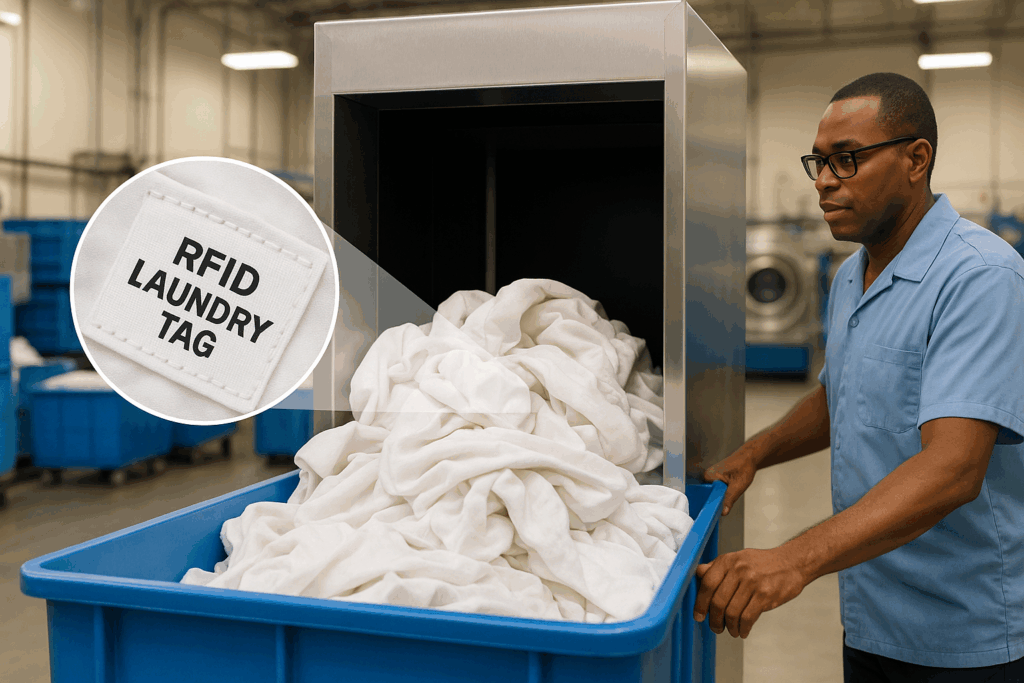
RFID laundry tags are radio-frequency identification tags built specifically for textile laundry management. Each tag contains a microchip and antenna that can be read by an RFID reader without direct contact or a visible scan code. The tag usually carries a unique electronic ID, which works as the digital identity of one textile item.
Unlike ordinary RFID labels, RFID laundry tags are built to stay attached to fabric and keep working through commercial laundry conditions. They are made to resist water, detergent, heat, drying, pressure, folding, and repeated handling, so the chip and antenna remain protected during daily use.
The tag itself usually does not store the full history of the item. It mainly provides a unique ID. The laundry software links that ID to records such as item type, owner, wash count, last scan point, clean or dirty status, and replacement timing.
Key Features Of RFID Laundry Tags
Passive RFID
Most RFID laundry tags are passive tags. They do not have a battery inside.
The tag gets power from the radio signal sent by the RFID reader. When the tag receives enough energy, the chip wakes up and sends back its ID. This battery-free design helps the tag stay small, washable, and suitable for repeated laundry use.
UHF And HF
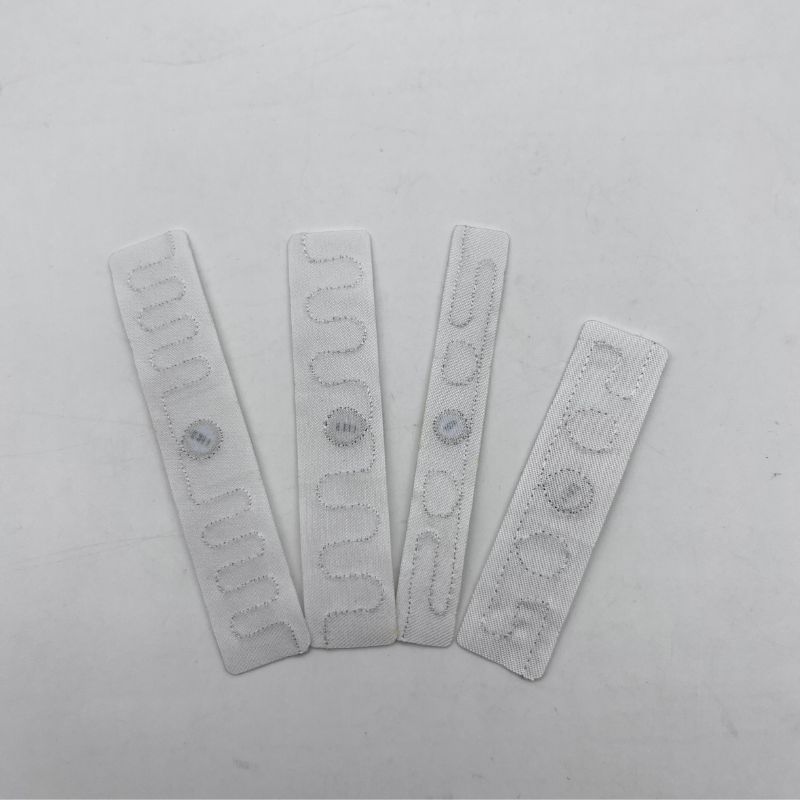
RFID laundry tags are usually made with UHF or HF technology.
UHF stands for Ultra-High Frequency. It is common in commercial laundry because it can read many tags quickly and from a longer distance. This is useful for scanning bags, carts, and stacks of linens or uniforms.
HF stands for High Frequency. It usually works at a shorter range. It may be used when closer and more controlled reading is preferred.
For most large laundry tracking projects, UHF is the more common choice.
Read Range
Read range is the distance between the RFID reader and the tag when the tag can still be scanned.
For most UHF RFID laundry tags, the common working range is about 1 to 3 meters in real laundry use. With a stronger fixed reader, larger antenna, and better tag placement, some tags may read around 5 to 6 meters under good conditions.
HF RFID laundry tags usually read at a much shorter distance, often from a few centimeters to several dozen centimeters. They are more suitable for close and controlled scanning, not bulk reading from carts or large textile stacks.
The actual read range can change after the tag is attached to fabric. Wet towels, dense stacks, folded sheets, metal laundry carts, tag position, reader power, and antenna angle can all reduce the reading distance.
Bulk Reading Support
RFID laundry tags are often used in high-volume environments, so they need to support fast scanning in groups. A reader can scan many tagged towels, sheets, or garments at once, depending on the reader setup and tag placement.
It helps reduce manual counting and speeds up collection, sorting, packing, and delivery checks.
Washable And Waterproof Structure
A true RFID laundry tag is made to survive repeated washing. The chip and antenna are protected inside a washable housing, so water and detergent do not easily damage the tag during daily laundry cycles.
Heat Resistance
Laundry tags must handle heat from washing, drying, ironing, pressing, or tunnel finishing. The exact temperature rating depends on the tag material and structure, but heat resistance is one of the most important features for commercial laundry use.
Chemical Resistance
Commercial laundry may involve detergent, softener, bleach, disinfectant, alkali, or other cleaning chemicals. RFID laundry tags are designed with protective materials that help prevent chemical damage to the internal chip and antenna.
Chemical resistance is especially important for hospital linen, industrial uniforms, and workwear that needs stronger cleaning.
Pressure And Impact Resistance
Laundry tags may face pressure from extractors, ironing machines, presses, folding machines, and heavy stacks of wet textiles. A good RFID laundry tag should protect the internal parts from cracking, breaking, or losing readability under pressure.
Flexible Or Textile-Friendly Design
Many RFID laundry tags are soft, thin, or flexible enough to be sewn into fabric without making the textile uncomfortable or difficult to fold. It is important for towels, bed sheets, uniforms, robes, and garments that touch the body.
The tag should stay readable without making the item feel bulky or awkward.
Strong Attachment Options
RFID laundry tags are made for textile attachment. Common options include sewing, heat sealing, pouch insertion, or label integration.
Good attachment support is part of the product design. If the tag falls off before the textile reaches the end of its useful life, the tracking system loses value.
How Do RFID Laundry Tags Work?
RFID laundry tags work by giving each textile item a scannable electronic ID. Once the tag is attached and registered in the laundry system, the item can be identified whenever it passes an RFID reading point.
What Is Inside An RFID Laundry Tag?
An RFID laundry tag has three main parts: a chip, an antenna, and a protective outer structure.
The chip stores the tag’s ID. The antenna receives the signal from the RFID reader and sends the tag response back. The protective structure keeps the chip and antenna safe during washing, drying, pressing, and handling.
This protected design is why RFID laundry tags can be used on textiles instead of only on boxes, labels, or warehouse items.
How The Tag Communicates With A Reader
When an RFID reader sends out a radio signal, a passive RFID laundry tag receives energy from that signal. The tag then wakes up and sends its ID back to the reader.
The reader does not need to touch the tag. It also does not need to see the tag directly like a barcode scanner. As long as the tag is within the reader’s working range, it can be scanned through fabric, inside a laundry bag, or in a stack of textiles.
How The Software Uses The Tag ID
The tag ID by itself is only a number. The laundry software gives that number meaning.
For example, one tag ID can be linked to a bath towel, a hotel, a department, a purchase batch, and a wash count. When the tag is scanned, the software updates the record for that item.
The system can show whether the item is clean, dirty, in storage, in transit, delivered, missing, or ready for replacement.
How Scans Create A Tracking Record
RFID laundry tags do not track location by themselves. They create useful records only when they are scanned at different points in the laundry workflow.
A tagged item may be scanned during collection, receiving, washing, sorting, packing, delivery, and return checking. Each scan adds a new record to the system.
Over time, these scan records help businesses understand how many textiles they have, where items were last seen, how often they were washed, and which items are lost or aging.
Common Types Of RFID Laundry Tags
RFID laundry tags come in different shapes and materials because textiles do not all go through the same laundry process. The right type depends on the fabric, attachment method, washing conditions, and reading needs.
Textile RFID Laundry Tags
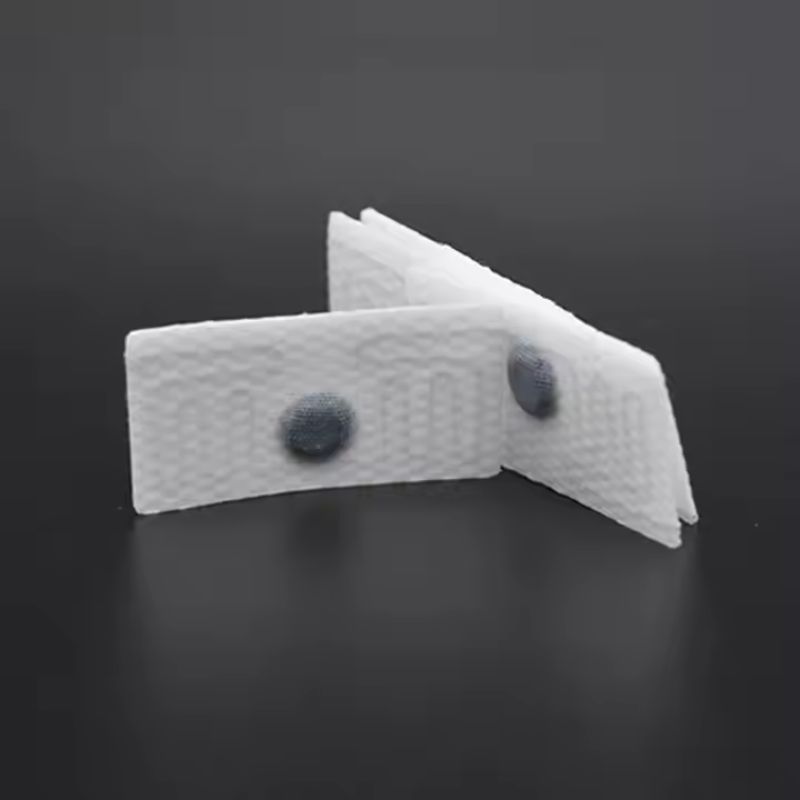
Textile RFID laundry tags are soft tags made for sewing into linens, towels, uniforms, robes, and other fabric items. They are usually thin and flexible, so they can stay inside a hem, seam, label, or small fabric pouch without making the item feel too stiff.
This type is common in hotels, hospitals, spas, and commercial laundries because it works well for high-volume textile tracking. It is a practical choice when comfort, flexibility, and long-term attachment are important.
Silicone RFID Laundry Tags
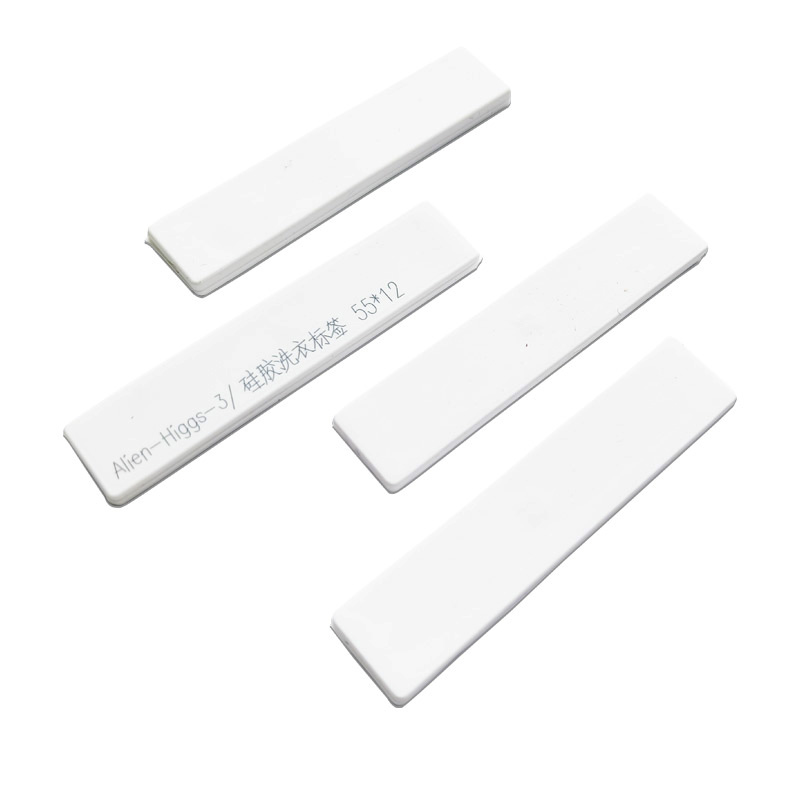
Silicone RFID laundry tags use a soft protective silicone housing around the chip and antenna. They are flexible, waterproof, and resistant to repeated washing and drying.
Silicone tags are often used when the tag needs a stronger outer layer but still needs to bend with the fabric. They can work well for uniforms, towels, workwear, and other items that need a balance of durability and textile comfort.
PPS RFID Laundry Tags
PPS RFID laundry tags are made with a hard plastic material known for heat and chemical resistance. They are usually smaller and more rigid than textile or silicone tags.
This type is often used in harsh laundry environments where the tag may face high temperature, pressure, chemicals, or stronger mechanical stress. PPS tags are not as soft as textile tags, so placement matters more when they are used on garments or items that touch the body.
Button RFID Laundry Tags
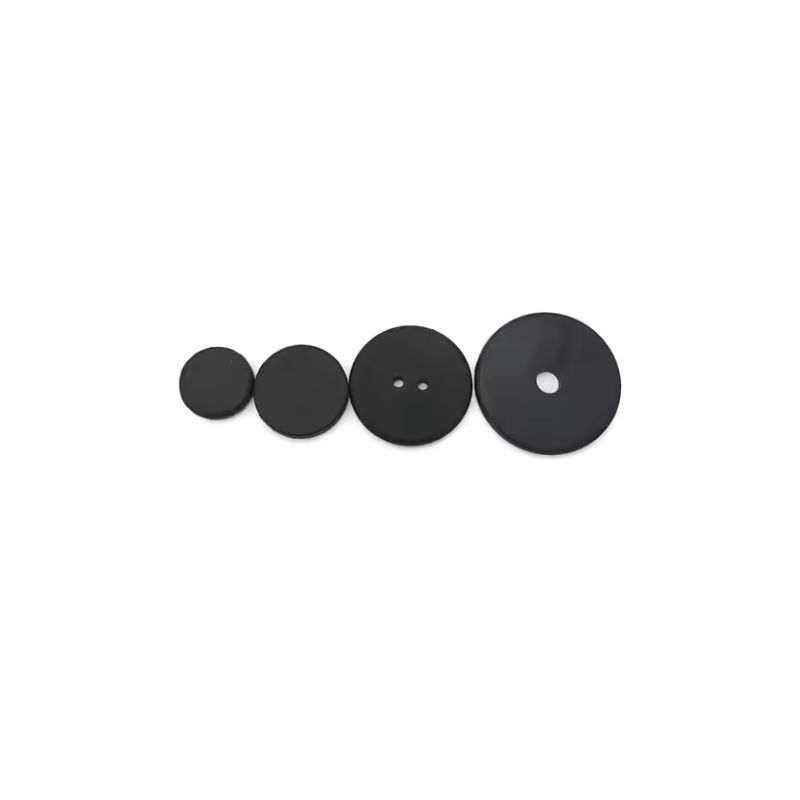
Button RFID laundry tags are small, round tags that can be attached to garments or textile items like a button. They are compact and durable, which makes them useful for uniforms, workwear, and rental garments.
Because they are more visible and structured than soft textile tags, they are usually placed where they will not affect comfort or appearance. They are useful when a stronger physical tag is needed and hidden sewing is not the main concern.
Heat-Seal RFID Laundry Labels
Heat-seal RFID laundry labels are designed to be applied to fabric with heat and pressure. They are useful when large numbers of garments or linens need to be tagged quickly and consistently.
This type can save time compared with sewing, but it must match the fabric and laundry process. The adhesive layer needs to stay stable through washing, drying, and handling, or the tag may peel off before the textile reaches the end of its service life.
Sew-In RFID Laundry Tags
Sew-in RFID laundry tags are made to be stitched into fabric, usually in a seam, hem, care label, or fabric pocket. This is one of the most common attachment styles for towels, sheets, uniforms, and reusable linen.
Sew-in tags are a good choice when long-term attachment is more important than fast application. They are also easier to place in protected areas where the tag is less likely to rub, bend sharply, or face direct pressure.
Woven RFID Laundry Labels
Woven RFID laundry labels combine textile labeling and RFID tracking in one piece. They can be made to look more like a normal garment label while carrying the RFID tag inside.
This type is useful for uniforms, workwear, and branded textile items where appearance matters. It can also help keep the RFID tag in a consistent position during production or large-scale tagging.
Applications Of RFID Laundry Tags
RFID laundry tags are used wherever large numbers of textiles need to be washed, counted, sorted, returned, and reused. They are especially useful when many items look similar and manual counting takes too much time.
Hotels And Resorts
Hotels use RFID laundry tags to track sheets, pillowcases, towels, bathrobes, table linen, and spa textiles. Each item can be scanned when it leaves the hotel, enters the laundry, returns clean, and goes back into storage.
This gives the hotel a clearer view of linen stock. It also helps reduce missing towels, wrong return quantities, and disputes with outside laundry services.
Hospitals And Healthcare Facilities
Hospitals handle large amounts of linen every day, including bed sheets, patient gowns, blankets, towels, staff uniforms, and surgical textiles. RFID laundry tags help identify and separate these items by department, facility, or use type.
They are useful in healthcare laundry because items move fast and must be counted accurately. The system can show which items are clean, dirty, in transit, or missing from circulation.
Commercial And Industrial Laundries
Commercial laundries use RFID laundry tags to manage textiles from different customers in the same facility. The tags help separate batches, check incoming quantities, verify outgoing deliveries, and record wash history.
For laundries that serve hotels, hospitals, restaurants, factories, or uniform rental customers, RFID reduces manual checking and gives each customer a clearer textile record.
Uniform Rental Companies
Uniform rental companies use RFID laundry tags to track workwear, staff uniforms, protective clothing, and rental garments. Each garment can be linked to a customer, employee, size, department, or service schedule.
This is useful for return checks, garment replacement, repair tracking, and loss control. It also helps keep the right uniform stock available for each customer.
Nursing Homes And Care Facilities
Care facilities often need to track resident clothing, bed linen, towels, and care textiles. RFID laundry tags can reduce mix-ups and make it easier to return personal items to the right resident or room.
This is useful when many similar garments or linens are washed together and need to be sorted correctly after cleaning.
Spas, Gyms, And Clubs
Spas, gyms, and clubs use RFID laundry tags for towels, robes, massage linens, locker-room textiles, and member-service items. The tags help track how many items are issued, returned, washed, and lost.
For businesses with heavy daily towel use, RFID gives better control over textile stock and replacement needs.
Restaurants And Catering Businesses
Restaurants and catering companies can use RFID laundry tags for tablecloths, napkins, chef coats, aprons, and kitchen textiles. These items often move between dining areas, kitchens, laundry providers, and storage rooms.
RFID tracking makes it easier to count items by location, customer, event, or delivery batch. It also helps identify linen loss and overuse before stock runs too low.
How To Use RFID Laundry Tags Effectively
RFID laundry tags need to be attached, registered, scanned, and maintained correctly. A tag that is not fixed well, not linked to the right item, or not scanned at the right point will not give useful tracking data.
Attach The RFID Laundry Tag
The first step is to attach the tag to the textile item. The attachment method should match the tag type, fabric, washing process, and how the item will be used.
Before tagging a full batch, test a small sample first. Use the same fabric, same attachment method, and same laundry process planned for daily use. Scan the tag before washing, after attachment, after washing, after drying, and after folding or stacking. This helps catch weak attachment, poor tag placement, or read problems before large-scale use.
The attachment options include:
Sewing
Sewing is one of the most common ways to attach RFID laundry tags. The tag can be sewn into a seam, hem, care label, fabric pouch, or hidden edge of the textile.
This method works well for towels, sheets, uniforms, robes, and reusable linen. The stitches should hold the tag firmly, but they should not pierce the chip or antenna area unless the tag is specifically designed with a sewing margin or sewing hole.
For towels and sheets, a consistent edge or label area makes scanning and sorting easier. For uniforms and workwear, an inner seam or sewn label area is usually better because it is less likely to rub the skin or affect movement.
Heat Sealing
Heat sealing uses heat and pressure to bond an RFID laundry tag or label to fabric. It is useful when a large number of garments or linens need to be tagged quickly and consistently.
This attachment method depends heavily on the tag, adhesive, fabric, heat press setting, pressure, and pressing time. If the bond is weak, the tag may peel after repeated washing. If the temperature or pressure is too high, the fabric may shrink, shine, burn, or lose strength.
Heat sealing should always be tested on the actual textile before full production. After testing, check whether the tag stays flat, bonds firmly, and remains readable after washing, drying, and handling.
Mechanical Attachment
Some hard RFID laundry tags, button-style tags, or hole-based tags can be fixed to textiles with a button, snap, rivet, tie, or similar mechanical fastener. This method is mainly used for uniforms, workwear, industrial textiles, and items where a visible or slightly harder tag is acceptable.
Mechanical attachment is not usually the first choice for soft towels, bed sheets, or garments that need to stay smooth against the skin. The fastener must stay secure during washing, drying, and handling. It should not create a sharp edge, damage the fabric, or sit in a place that will be pressed, rubbed, or pulled often.
Built-In During Production
RFID laundry tags can also be built into textiles during production. The tag may be placed inside a care label, woven label, seam, hem, fabric pocket, or other planned position before the item is finished.
It gives a cleaner appearance, more consistent tag placement, and less extra labor after the textiles arrive. It also reduces the chance of staff attaching tags in the wrong place later.
The tag position, RFID frequency, chip type, encoding plan, and software data format should be confirmed before production starts. Once the tag is built into the textile, replacement can be harder than with a standard sewn-on tag.
Register The Tag In The System
After the tag is attached, the tag ID must be linked to the textile item in the laundry system. Without this step, the reader may detect the tag, but the software will not know what the item is.
A textile record may include the item type, customer, department, size, purchase batch, wash count, current status, and replacement date. The RFID tag provides the unique ID. The software stores the useful item details.
Some tags are pre-encoded before delivery. Others are encoded by the user before or during registration. In either case, every tag ID should be unique, cleanly recorded, and matched to the correct item. Duplicate records, wrong item names, or missing customer information can cause tracking errors later.
Scan The Tag During The Laundry Workflow
RFID laundry tags should be scanned at the points where item movement matters.
Common scan points include collection, receiving, washing, sorting, packing, delivery, storage, and return checking. Each scan updates the item record and helps show where the textile was last handled.
For example, a hotel towel can be scanned when it leaves the hotel, reaches the laundry facility, is packed for return, and arrives back in clean linen storage. A uniform can be scanned when it is issued, returned, washed, repaired, or retired.
Not every laundry operation needs every scan point. The best workflow depends on what the business needs to control, such as loss, wash count, customer sorting, delivery accuracy, or garment assignment.
Check Read Performance During Daily Use
After the system goes live, read performance should be checked regularly. Useful checks include scanning tagged items when they are dry, wet, folded, stacked, bagged, and placed in carts. If the system uses fixed readers or RFID tunnels, test the normal cart speed and loading style. If staff use handheld readers, check the scanning distance, angle, and speed.
These checks help keep the system stable and also show whether missed reads are caused by damaged tags, poor placement, dense stacks, metal carts, or reader setup.
Handle Missed Reads
If a tag is not scanned, do not assume the tag is broken right away.
Check the simple causes first. The tag may be too far from the reader, buried inside a dense stack, blocked by wet fabric, folded into a poor position, or placed near a metal laundry cart. Reader antenna angle, reader power, and scanning speed can also affect the result.
If the same item keeps failing after normal checks, inspect the tag and attachment area. The tag may be damaged, loose, folded too sharply, or placed in a bad location. If it still cannot be read reliably, remove it from active use and replace it.
Remove An RFID Laundry Tag
The removal method depends on how the tag was attached.
For a sewn-in tag, use small scissors or a seam ripper to cut the stitches around the tag. Do not cut through the tag itself while it is still on the textile. Remove it slowly so the fabric, seam, or care label is not damaged.
For a heat-sealed tag, removal is harder. Pulling it off by force can tear the fabric, leave adhesive marks, or damage the textile surface. If the textile will continue to be used, test the removal method first or ask the tag supplier for the proper process.
RFID laundry tags should not be removed from rental linen, workplace uniforms, hospital textiles, or customer-owned items unless the operator has permission to do so.
Replace Or Retire The Tag
When a tag is removed, damaged, unreadable, or replaced, the software record must be updated. Otherwise, the system may still count the old tag as active.
If the textile is still usable, attach a new tag and link the new tag ID to the same item record. If the textile is worn out, damaged, lost, or removed from service, mark it as retired in the system.
Clean tag records help prevent wrong inventory counts, duplicate item records, and false missing-item alerts caused by outdated or incorrect database records.
How Durable Are RFID Laundry Tags
RFID laundry tags are designed to last through repeated commercial laundry cycles, not just one wash. Their durability is usually measured by wash-cycle life, physical condition, read performance, and attachment strength.
A durable tag should still be readable, stay securely attached, and remain safe to use on the textile after many rounds of washing, drying, folding, sorting, and handling.
What Does Wash-Cycle Rating Mean?
Wash-cycle rating shows how many complete laundry cycles a tag is designed or tested to survive.
One wash cycle usually means more than putting the item in a washing machine once. In commercial laundry, a full cycle may include washing, rinsing, extraction, drying, folding, sorting, and sometimes ironing, pressing, steam finishing, or sterilization.
For example, a tag rated for 100 wash cycles is designed for about 100 complete laundry processes. A tag rated for 200+ wash cycles is built for longer service use, which is often needed for hotel linen, hospital textiles, industrial uniforms, and rental garments.
What Conditions Affect Tag Life
The service life of an RFID laundry tag can be affected by heat, water, detergent, bleach, disinfectants, drying temperature, pressing pressure, bending, rubbing, and repeated handling.
These conditions matter because laundry tags face stress from several directions at once. A towel may be wet, heavy, twisted, dried at high heat, folded tightly, and stacked under pressure. A uniform may face friction, body movement, chemicals, and repeated washing. Hospital linen may go through stronger cleaning and more frequent processing.
As a result, RFID laundry tag design needs to balance reading performance and physical protection. The tag must protect the chip and antenna while staying suitable for the textile.
How Much Do RFID Laundry Tags Cost?
RFID laundry tag prices vary by many factors.
In general, simple sew-in textile RFID laundry tags are usually the lower-cost option, especially for towels, sheets, hotel linen, and standard uniform tracking. They use a soft textile structure and are often ordered in large quantities.
Heat-seal RFID laundry labels are usually priced higher than basic sew-in textile tags because they need an adhesive layer and a structure that can bond to fabric under heat and pressure. They are useful when large batches need fast and consistent application.
Silicone RFID laundry tags, PPS RFID laundry tags, and button-style RFID laundry tags are usually more expensive than basic textile tags. They use stronger protective housings and are made for harsher laundry conditions, such as higher heat, stronger chemicals, heavier pressure, or more demanding workwear use.
Custom RFID laundry tags cost more when they require special sizes, logo printing, visible numbers, barcode or QR code marking, pre-encoding, data matching, custom chip selection, or special packaging.
Other common cost factors include:
- RFID Frequency: UHF and HF tags may use different chips, antennas, and tag structures.
- Chip Model: Some projects need a specific chip, memory size, or protocol to match an existing RFID system.
- Encoding: Tags can be supplied blank, pre-encoded, or matched with a data file.
- Printing Or Marking: Visible numbers, logo printing, barcodes, QR codes, or serial numbers may add cost.
- Packaging: Tags can be packed by batch, customer, project, or encoded number range.
- Order Quantity: Larger orders usually reduce the unit cost.
For an accurate RFID laundry tag quote, send us your requirements and order quantity. We can help match the right tag type to your laundry use and provide a clear price based on your project.
How To Choose The Right RFID Laundry Tag
Choosing the right RFID laundry tag is mainly about matching the tag to your textile, laundry process, RFID system, and data needs. The tag should fit the way the item is washed, attached, scanned, and managed in your software.
Textile And Laundry Process
Towels, sheets, uniforms, workwear, hospital linen, robes, and table linen may need different tag structures. A soft textile RFID tag may work well for hotel towels and sheets. A silicone, PPS, or button-style tag may be better for industrial uniforms, heavy workwear, or textiles exposed to stronger heat, chemicals, or pressure.
The laundry process matters as much as the item type. Check whether the textile will go through high-temperature washing, tumble drying, ironing, pressing, steam finishing, sterilization, bleach, or strong detergents. The tag should be selected for the actual process, not only the product name.
Attachment Method
Choose the tag based on how it will be fixed to the textile.
Sew-in tags are common for towels, sheets, uniforms, robes, and reusable linen. Heat-seal labels are useful when many garments or linens need fast and consistent application. Mechanical attachment may fit hard tags, button-style tags, or hole-based tags used on uniforms, workwear, or industrial textiles.
The tag shape, size, and housing should match the attachment method. A tag made for sewing may not work well as a heat-seal label. A hard tag may not be suitable for soft bed linen or garments worn close to the skin.
RFID System Compatibility
The tag must work with your RFID readers, antennas, and software.
For most large laundry tracking projects, UHF RFID is used because it supports longer read range and bulk scanning. HF RFID may be used for closer and more controlled reading. If you already have RFID equipment, confirm the frequency, protocol, chip type, and encoding format before ordering tags.
Compatibility is important because a tag can be physically durable but still unsuitable for your system if the reader cannot capture it correctly or the software cannot match the tag data.
Encoding And Data Requirements
Decide how the tag data should be prepared before use.
Some projects only need blank tags with unique IDs. Others need pre-encoded EPC data, locked memory, visible serial numbers, barcode or QR code printing, or a matched data file for system import.
For large projects, data matching can save time during setup. Each tag ID should match the correct item record, customer, batch, or textile type. Clean data at the start helps avoid wrong inventory counts later.
Read Performance
Read performance should match the way textiles are scanned in daily use.
A handheld reader, fixed reader, RFID tunnel, laundry cart, shelf, or sorting table may need different tag performance. If textiles are scanned in bags, dense stacks, or carts, the tag needs stable reading in those conditions.
Wet fabric, folded sheets, thick towel stacks, metal carts, tag placement, reader power, and antenna angle can all affect scanning. The right tag should read reliably in the real laundry workflow, not only when tested alone.
FAQs About RFID Laundry Tags
Can I Use Normal RFID Labels For Laundry?
No. Normal RFID labels are usually made for packaging, cartons, retail items, or warehouse inventory. They are not designed to survive water, detergent, drying heat, pressing, folding, and repeated fabric handling.
RFID laundry tags use a stronger protective structure around the chip and antenna. They are made for textiles that go through repeated laundry cycles.
Do RFID Laundry Tags Count Wash Cycles Automatically?
The tag itself does not usually count wash cycles. It mainly provides a unique ID.
Wash-cycle tracking is done by the laundry software. When the tagged item passes a washing or processing checkpoint, the system can add one wash cycle to that item’s record. The accuracy depends on how the scan points are set up in the workflow.
What Is The Difference Between RFID Laundry Tags And Traditional Tags?
Traditional laundry tags usually rely on printed text, sewn labels, barcodes, or QR codes. They often need to be checked by hand or scanned one by one with a visible code.
RFID laundry tags use radio-frequency identification. The reader does not need to see the tag directly, and many tagged items can be scanned at the same time. This makes RFID more useful for laundry bags, carts, shelves, and large textile batches.
Traditional tags are still useful as visible backup labels. RFID tags are better when the laundry operation needs faster counting, item-level tracking, wash-cycle records, and better control over missing textiles.
How Long Is The Service Life Of RFID Laundry Tags?
The service life of RFID laundry tags depends on the tag’s wash-cycle rating and how often the textile is washed. Many RFID laundry tags are designed for around 100 to 200+ wash cycles, while some heavy-duty tags may support longer use.
To estimate the service life, divide the wash-cycle rating by the real washing frequency of each textile item. For example, if a tag is rated for 200 wash cycles and the item is washed once a day, the tag may last about 6 to 7 months. If the same item is washed twice a week, the service life may be close to 2 years. If it is washed once a week, it may last around 4 years
One wash cycle usually means a complete laundry process, not just one scan or one rinse. It may include washing, rinsing, extraction, drying, folding, sorting, and sometimes ironing, pressing, steam finishing, or sterilization.
For high-turnover hotel towels, hospital linen, and rental uniforms, service life is often measured in months or a few years because the items are washed frequently. For lower-use textiles, the same tag may stay in service much longer.
Can One RFID Laundry Tag Be Reused On Another Textile?
It can be reused only if the tag is still readable, physically undamaged, and removable without harming the tag. The software record must also be updated before the tag is assigned to a new textile item. In many laundry operations, reuse is not ideal because the tag history may be tied to the original item. For cleaner tracking, a new textile item is usually assigned a new tag ID.
What Happens If Two Laundry Items Have The Same Tag ID?
Duplicate tag IDs can cause wrong inventory records. The software may treat two different textiles as the same item, which can lead to false counts, missing-item errors, wrong wash history, or incorrect customer records.
Each RFID laundry tag should have a unique ID in the system. For large projects, pre-encoding and data file matching can help prevent duplicate records.
Can RFID Laundry Tags Work With Barcode Or QR Code Labels?
Yes. Some RFID laundry tags or textile labels can include a printed number, barcode, or QR code along with the RFID function.
This is useful when staff need a visible backup ID. If the RFID tag cannot be scanned for any reason, the printed code can help identify the item manually.
Can An iPhone Read RFID Laundry Tags?
Most iPhones cannot read standard UHF RFID laundry tags directly. iPhones support NFC reading, but NFC is short-range and works differently from the UHF RFID systems commonly used for bulk laundry tracking.
If the laundry tag is NFC or HF-compatible, a phone may read it at close range. For most hotel, hospital, and industrial laundry systems, a dedicated UHF RFID handheld reader or fixed reader is needed.
Will RFID Laundry Tags Damage Washing Machines Or Dryers?
A properly attached RFID laundry tag should not damage washing machines or dryers. Soft textile tags are usually safer for towels, sheets, and garments because they move with the fabric.
Hard tags, button-style tags, or mechanically attached tags must be fixed securely. A loose hard tag can damage the textile, create noise, or cause trouble during washing and drying.
Can RFID Laundry Tags Be Used For Personal Clothing In Care Homes?
Yes. RFID laundry tags can be used for resident clothing in nursing homes, care homes, and similar facilities. They help reduce mix-ups when many personal garments are washed together. For personal clothing, comfort and placement matter. A soft sew-in tag or label-style tag is usually more suitable than a hard tag, especially for garments that touch the skin.
What Is The Difference Between RFID Laundry Tags And RFID Linen Tags?
RFID linen tags are one type of RFID laundry tag. They are mainly used for sheets, towels, pillowcases, table linen, bathrobes, and other flat or soft textile items.
RFID laundry tags is the broader term. It can include tags for linen, uniforms, workwear, hospital textiles, rental garments, and other washable textile items.
Do RFID Laundry Tags Support Data Encryption?
Some RFID laundry tags support basic data protection features, but not every tag supports encryption. Many standard laundry tracking projects only use a unique tag ID, while the detailed item data stays in the laundry software.
Depending on the chip and system, RFID laundry tags may support locked memory, password protection, access control, or authentication features. Stronger security options should be confirmed before ordering if the project involves higher-value garments, controlled textile inventory, or sensitive customer data.
Request A Quote
Need RFID laundry tags for your textile tracking project? Send us your basic requirements, including the textile type, laundry conditions, attachment method, and order quantity.
We can help you choose a suitable tag style, chip, encoding option, and printing method based on how the tags will be used. Whether you need sew-in tags, heat-seal labels, or custom RFID laundry tags, we can provide a clear quote for your project.
Contact us today to request samples or get a custom RFID laundry tag quote.