RFID y Etiquetas NFC Pueden parecer casi idénticos, pero a menudo se utilizan de formas muy diferentes. Uno puede ayudar a una empresa a identificar artículos desde la distancia, mientras que el otro está diseñado para acercarlo al móvil.
Por eso, la comparación entre las etiquetas RFID y las NFC puede resultar confusa al principio. Los nombres parecen distintos, pero las tecnologías están estrechamente relacionadas.
¿Es lo mismo NFC que RFID?
No exactamente. La NFC es un tipo de RFID, mientras que la RFID es la tecnología más amplia que se utiliza para identificar objetos etiquetados e intercambiar datos a través de ondas de radio.
Por lo tanto, toda etiqueta NFC es una etiqueta RFID, pero muchas etiquetas RFID no son etiquetas NFC. A menudo se habla de estos términos por separado porque la tecnología NFC está diseñada para una interacción a muy corta distancia, especialmente con teléfonos móviles, mientras que otros sistemas RFID pueden utilizar frecuencias y lectores diferentes.
¿Qué es una etiqueta RFID?
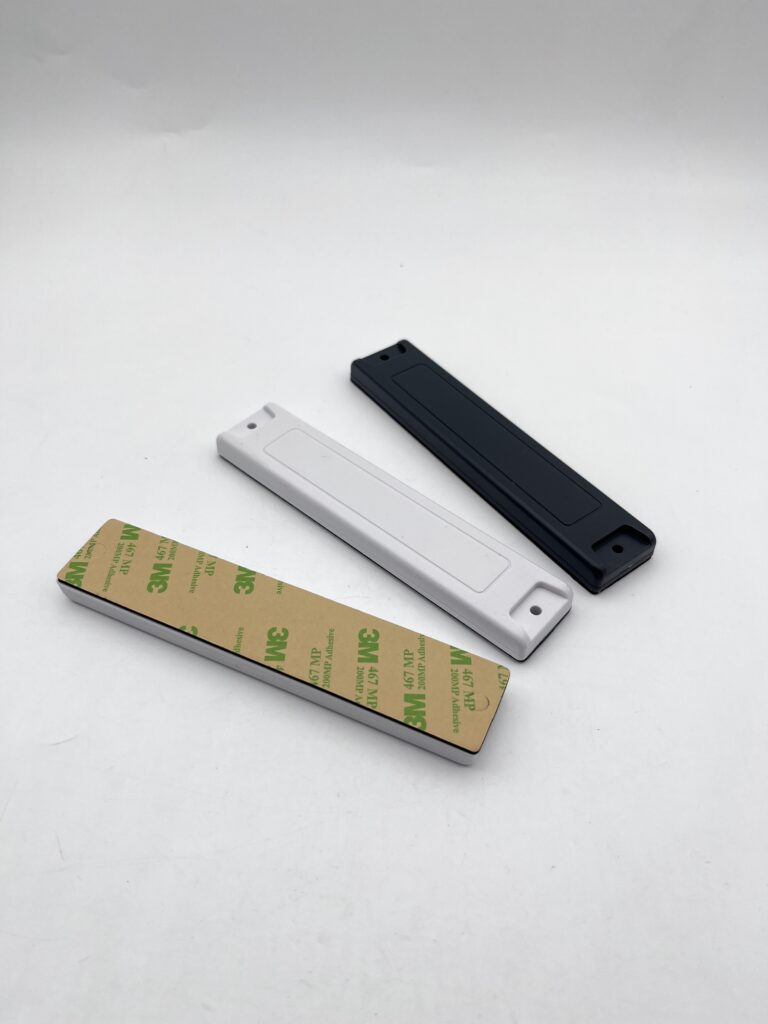
Ahora que queda clara la relación entre la tecnología RFID y la NFC, podemos analizar el marco tecnológico más amplio que hay detrás de ellas. RFID son las siglas de «identificación por radiofrecuencia», una tecnología que utiliza ondas de radio para identificar objetos etiquetados e intercambiar datos sin contacto directo. Una etiqueta RFID es el componente que se adhiere al objeto. Suele contener un microchip y una antena. El chip almacena un identificador u otros datos, mientras que la antena recibe la señal del lector y envía la respuesta de la etiqueta.
La mayoría de las etiquetas RFID son pasivas. No tienen batería y permanecen inactivas hasta que entran en el campo de radio del lector. El lector suministra la energía necesaria para alimentar el chip y, a continuación, recibe la respuesta de la etiqueta. Las etiquetas RFID activas utilizan su propia batería, por lo que pertenecen a una clase diferente de sistema y pueden comunicarse a mayores distancias.
Las etiquetas RFID se dividen principalmente en tres grupos según su frecuencia de funcionamiento.
RFID de baja frecuencia, o RFID de baja frecuencia (LF), suele funcionar a 125 kHz o 134 kHz. Tiene una velocidad de transmisión de datos relativamente lenta y una distancia de lectura corta, que suele oscilar entre 10 y 50 cm. Los sistemas de baja frecuencia se utilizan a menudo para la identificación de animales y el control de acceso físico, ya que son menos sensibles a las interferencias de radio que los sistemas de mayor frecuencia.
RFID de alta frecuencia, o RFID de alta frecuencia (HF), funciona a 13,56 MHz. Dependiendo de la norma y del diseño de la etiqueta, su distancia de lectura puede oscilar entre el contacto directo y aproximadamente un metro. La tecnología RFID de alta frecuencia (HF) se utiliza para aplicaciones como la emisión de billetes y las tarjetas sin contacto. La tecnología NFC también pertenece a este grupo de frecuencias, aunque normalmente solo funciona a unos pocos centímetros.
RFID de frecuencia ultraalta, o RFID UHF, suele funcionar en bandas regionales comprendidas entre 860 y 930 MHz. Permite una transferencia de datos más rápida y puede leer etiquetas a varios metros de distancia. Un lector de UHF también puede identificar numerosas etiquetas dentro de la misma zona de lectura, por lo que este tipo de lector se utiliza ampliamente para la gestión de inventarios y el seguimiento de activos.
Estos grupos de frecuencias no son intercambiables. Un lector RFID debe ser compatible con la frecuencia de funcionamiento y el protocolo de comunicación de la etiqueta. Un sistema diseñado para etiquetas de baja frecuencia (LF) no puede leer simplemente etiquetas de alta frecuencia (HF) o ultraalta frecuencia (UHF), aunque las etiquetas tengan un aspecto similar.
¿Qué es un Etiqueta NFC?
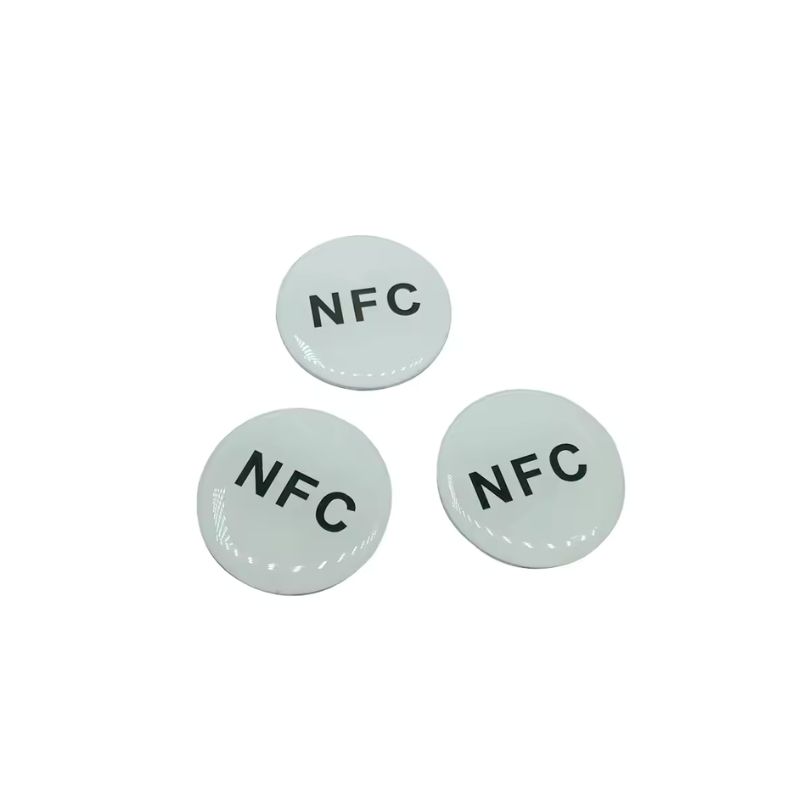
La tecnología NFC se enmarca dentro de la banda de alta frecuencia de la RFID. Su nombre son las siglas de «Near Field Communication» (comunicación de campo cercano), una tecnología sin contacto que funciona a 13,56 MHz. Una etiqueta NFC es un pequeño dispositivo de memoria diseñado para intercambiar datos con un teléfono o un lector compatible a corta distancia.
Al igual que otras etiquetas RFID pasivas, contiene un chip conectado a una antena. La antena suele tener forma de bobina plana, ya que la tecnología NFC funciona mediante inducción magnética. Cuando un teléfono se acerca, su campo NFC suministra la energía suficiente para activar la etiqueta. A continuación, el chip procesa la solicitud y devuelve los datos almacenados a través de la misma conexión. La etiqueta no necesita batería.
Muchos Etiquetas NFC almacenar información en el formato NFC Data Exchange Format, normalmente abreviado como NDEF. El NDEF ofrece a los teléfonos y lectores una forma estándar de interpretar los datos. Una etiqueta puede contener una URL, un registro de texto o una pequeña instrucción para una aplicación. Cuando se abre una página web tras tocar la etiqueta, esta suele almacenar el enlace en lugar de la propia página web.
Dependiendo de la etiqueta, su memoria puede reescribirse o pasar a ser de solo lectura tras la programación. La cantidad de memoria disponible también varía. Las etiquetas sencillas son suficientes para registros cortos, mientras que las más avanzadas pueden admitir estructuras de datos más grandes o comandos específicos para cada aplicación.
El NFC Forum define varios tipos de etiquetas con distintos protocolos de comunicación y estructuras de memoria. Un dispositivo compatible gestiona estas diferencias cuando detecta la etiqueta. Sin embargo, el hecho de compartir la misma frecuencia de 13,56 MHz no garantiza la compatibilidad. Un teléfono puede leer los protocolos de etiquetas NFC compatibles, pero no puede leer automáticamente todas las etiquetas RFID de alta frecuencia (HF) que funcionan en esa frecuencia.
Etiquetas RFID frente a NFC: ¿cuáles son las diferencias?
Las etiquetas RFID y NFC se basan en el mismo principio básico: un lector genera un campo de radio, la etiqueta responde y los datos se transmiten sin contacto físico. La diferencia radica en cómo está diseñado cada sistema para funcionar.
La tecnología RFID abarca varias frecuencias y estándares de comunicación. Su distancia de lectura puede oscilar entre unos pocos centímetros y varios metros. La tecnología NFC es una tecnología específica de 13,56 MHz diseñada para una interacción cercana y deliberada.
Etiquetas RFID frente a NFC: comparación rápida
| Característica | Etiquetas RFID | Etiquetas NFC |
| Ámbito tecnológico | Un amplio conjunto de sistemas de identificación por radiofrecuencia | Un tipo de RFID de alta frecuencia |
| Frecuencia de funcionamiento | Bandas LF, HF o UHF | 13,56 MHz |
| Rango de lectura típico | De centímetros a varios metros | Normalmente, unos pocos centímetros |
| Lector | Lector RFID compatible | Teléfono con NFC o lector específico |
| Patrón de lectura | Una etiqueta o varias, dependiendo del sistema | Normalmente, una etiqueta cercana |
| Acción del usuario | Puede funcionar de forma automática dentro de una zona de lectura | Normalmente requiere un grifo |
| Datos almacenados | Identificador y datos opcionales de la solicitud | Identificador y registros en formato NDEF |
| Redacción | Depende de la configuración del chip y de la memoria | Que se pueda leer y reescribir de forma habitual |
| Fuerza | Pasivo, asistido por batería o activo | Normalmente pasivo |
La tabla muestra una tendencia general, más que una regla válida para todos los productos RFID. La frecuencia, el protocolo y el diseño de la antena pueden influir en el comportamiento de una etiqueta RFID.
Tecnología de frecuencias y comunicaciones
Los sistemas RFID funcionan principalmente en tres bandas de frecuencia. Los sistemas de baja frecuencia utilizan 125 o 134 kHz. Los sistemas de alta frecuencia suelen utilizar 13,56 MHz, mientras que los de frecuencia ultraalta operan entre unos 860 y 930 MHz.
Estas bandas de frecuencia no se limitan a ser un simple dato en la ficha técnica. Modifican la forma en que la energía llega a la etiqueta y cómo se transmite la respuesta al lector.
Los sistemas de baja frecuencia (LF) y alta frecuencia (HF) suelen comunicarse mediante acoplamiento inductivo. La antena del lector genera un campo magnético que induce una corriente en la antena de la etiqueta. Los sistemas de ultraalta frecuencia (UHF) suelen utilizar ondas electromagnéticas y transmiten los datos mediante retrodispersión.
La tecnología NFC también funciona a 13,56 MHz mediante acoplamiento magnético de campo cercano. Es compatible con las tecnologías de comunicación NFC-A, NFC-B y NFC-F. Los dispositivos compatibles con NFC también pueden interactuar con determinadas etiquetas que cumplan la norma ISO/IEC 15693.
El hecho de compartir la misma frecuencia no garantiza la compatibilidad. Un lector debe ser compatible con el protocolo de comunicación de la etiqueta, además de con su frecuencia de funcionamiento. Por lo tanto, un teléfono con NFC no puede leer todas las etiquetas RFID de alta frecuencia (HF) simplemente porque ambas funcionen a 13,56 MHz.
Rango de lectura
El alcance de lectura de la tecnología RFID varía considerablemente. Las etiquetas de baja frecuencia (LF) suelen funcionar a una distancia de entre 10 y 50 cm. Los sistemas de alta frecuencia (HF) pueden alcanzar un alcance de entre unos 10 cm y un metro, mientras que algunos sistemas de ultraalta frecuencia (UHF) pueden leer etiquetas a varios metros de distancia.
La tecnología NFC está diseñada para un uso a muy corta distancia. Normalmente, el teléfono debe situarse a unos pocos centímetros de la etiqueta. El NFC Forum describe una distancia inferior a 2 cm como la más adecuada para muchas interacciones NFC, aunque la distancia de detección real puede variar en función del dispositivo y del diseño de la etiqueta.
El alcance indicado nunca está garantizado por sí solo. El tamaño y la orientación de la antena influyen en que llegue suficiente energía a la etiqueta. La potencia del lector también es importante.
La superficie sobre la que se coloca la etiqueta también puede influir en el rendimiento. El metal puede desajustar una antena normal, mientras que los líquidos pueden absorber la energía de radio. Las etiquetas diseñadas para estos materiales utilizan una estructura de antena diferente o una capa aislante.
Compatibilidad del lector
Las etiquetas RFID requieren un lector compatible con su frecuencia y protocolo. Un lector de baja frecuencia (LF) no puede leer una etiqueta de ultra alta frecuencia (UHF). La misma limitación se aplica cuando dos sistemas utilizan estándares diferentes dentro de la misma banda de frecuencias.
Los lectores RFID pueden adoptar diversas formas. Un lector fijo puede cubrir la entrada de un local o una línea de producción. Una unidad portátil permite al personal desplazarse por el almacén y escanear los objetos etiquetados allí donde se encuentren almacenados.
Las etiquetas NFC son más accesibles para el público, ya que muchos teléfonos ya incorporan un lector NFC compatible. En el modo lector/grabador, un dispositivo NFC puede detectar las etiquetas compatibles y leer los datos almacenados en ellas. También puede escribir nuevos datos cuando la etiqueta lo permita.
Un teléfono con NFC no es un lector de RFID de uso general. Normalmente, no puede detectar etiquetas de baja frecuencia (LF) ni etiquetas UHF estándar sin hardware externo.
«Una etiqueta cada vez» frente a la lectura masiva
Muchos sistemas RFID están diseñados para identificar varias etiquetas dentro de una misma zona de lectura. El lector utiliza un proceso de inventario para separar las respuestas e identificar las etiquetas individualmente, incluso cuando más de una responde al mismo tiempo.
Esta función resulta útil cuando no es posible presentar cada artículo por separado. Un lector puede detectar cajas etiquetadas que pasan por un portal o recopilar los identificadores de un grupo de artículos almacenados en una estantería.
La lectura masiva no es una característica de todos los protocolos RFID. Algunos sistemas de baja frecuencia (LF) y alta frecuencia (HF) están diseñados para leer una etiqueta cada vez. El número de etiquetas que se pueden identificar también depende de la configuración del lector y del entorno físico.
La tecnología NFC suele dirigirse a una sola etiqueta mediante un toque deliberado. Su corta distancia de funcionamiento ayuda al usuario a seleccionar la etiqueta deseada en lugar de leer varias etiquetas cercanas. La experiencia se asemeja más a elegir un objeto que a escanear toda una zona.
Almacenamiento y escritura de datos
Una etiqueta RFID no siempre almacena el registro completo asociado a un artículo. A menudo contiene un identificador que el software conectado utiliza para localizar el registro principal en una base de datos.
El chip también puede ofrecer memoria regrabable para los datos de las aplicaciones. La capacidad disponible depende del diseño de la etiqueta y del protocolo. Algunas etiquetas incluyen controles de acceso que limitan quién puede leer o modificar determinadas áreas de memoria.
Las etiquetas NFC también pueden contener un identificador único y memoria de aplicación. Lo que las distingue es que suelen utilizar el formato de intercambio de datos NFC (NFC Data Exchange Format), o NDEF. El NDEF ofrece a los dispositivos compatibles una forma estándar de interpretar el mensaje almacenado.
Un mensaje NDEF puede indicar al teléfono que abra una dirección web. También puede contener texto o información de contacto. La etiqueta suele almacenar la instrucción o el enlace, no el contenido completo de la página web.
Tanto la memoria RFID como la NFC pueden ser regrabables. Una etiqueta también puede bloquearse tras su codificación, dependiendo del chip. Algunos bloqueos son reversibles mediante el control de acceso, mientras que otros impiden de forma permanente cualquier modificación posterior.
Velocidad e interacción con el usuario
La velocidad de la tecnología RFID suele medirse en función de la eficiencia con la que un sistema es capaz de identificar las etiquetas dentro de una zona de lectura. Un lector fijo puede recoger las respuestas de las etiquetas sin necesidad de que un trabajador tenga que alinear cada etiqueta o detener cada artículo.
El lector puede detectar la misma etiqueta más de una vez mientras esta permanezca dentro del alcance. A continuación, el software filtra esas lecturas repetidas y determina qué eventos son relevantes para la aplicación.
La tecnología NFC está optimizada para ofrecer una experiencia diferente. El usuario acerca un dispositivo a una etiqueta y obtiene un resultado casi de inmediato. La tecnología NFC se encarga de la puesta en marcha y del intercambio de datos durante el breve tiempo que dura un toque.
Esta acción intencionada resulta útil cuando el sistema necesita saber qué elemento ha seleccionado la persona. Sin embargo, resulta menos adecuada cuando hay que identificar cientos de etiquetas sin tener que pulsar cada una de ellas individualmente.
Coste e infraestructura necesaria
El precio de la etiqueta por sí solo no refleja el coste total del sistema.
La implantación de un sistema RFID puede requerir lectores y antenas. Los sistemas de mayor envergadura también requieren trabajos de instalación e integración de software. La puesta en marcha de un portal de almacén resulta más costosa que la de un único lector de sobremesa, incluso cuando ambos utilizan el mismo tipo de etiqueta.
La tecnología NFC puede reducir los costes de hardware de los lectores cuando los usuarios escanean etiquetas con sus propios teléfonos. Es posible que una etiqueta de producto solo necesite la etiqueta y una dirección web para ofrecer una experiencia al cliente.
Eso no significa que todos los proyectos de NFC sean económicos. Es posible que haya que codificar las etiquetas durante la producción, y la plataforma asociada sigue requiriendo una gestión específica. Las aplicaciones que implican autenticación pueden requerir chips más potentes y medidas de seguridad adicionales en el backend.
Seguridad y privacidad
Ni la tecnología RFID ni la NFC son seguras por sí mismas. La seguridad depende de lo que almacene la etiqueta y de cómo verifique el sistema la respuesta.
Las etiquetas básicas pueden enviar datos legibles a cualquier lector compatible que se encuentre dentro de su alcance. Las etiquetas más avanzadas pueden permitir el control de acceso o la autenticación. Algunos sistemas cifran los datos confidenciales antes de grabarlos en la memoria de la etiqueta.
El corto alcance de la tecnología NFC establece un límite físico útil, pero no debe sustituir a la seguridad real. Las especificaciones de la tecnología NFC permiten la autenticación y la transferencia segura de datos cuando la aplicación así lo requiere.
Los sistemas RFID con zonas de lectura más amplias requieren un control más estricto sobre la ubicación de los lectores. Los permisos del sistema de fondo también son importantes. Es posible que un identificador de etiqueta no contenga por sí mismo ningún dato personal, pero la base de datos vinculada a ese identificador puede contener información confidencial.
Etiquetas RFID frente a NFC: ¿cuál deberías elegir?
Elige etiquetas RFID cuando necesites un mayor alcance de lectura o quieras identificar varios artículos durante el mismo proceso. Son más adecuadas para la gestión de inventario, el seguimiento de activos y otros sistemas que utilizan lectores específicos.
Elige etiquetas NFC cuando un usuario necesite interactuar con un artículo concreto a corta distancia. Son ideales para ofrecer información sobre productos, permitir el acceso digital y realizar acciones desde el teléfono.
La elección depende principalmente de cómo se vaya a leer la etiqueta. Utiliza RFID para una identificación más amplia o automatizada. Utiliza NFC para un contacto cercano e intencionado.
¿Se pueden utilizar conjuntamente las etiquetas RFID y NFC?
Sí. Las dos tecnologías pueden dar soporte a diferentes partes del mismo sistema.
Un producto puede utilizar la tecnología RFID para el seguimiento interno, mientras que una etiqueta NFC permite a los clientes acceder a la información del producto a través de un teléfono móvil. La tecnología RFID se encarga de la identificación operativa, mientras que la tecnología NFC permite la interacción directa con el usuario.
Ambas funciones pueden añadirse como etiquetas independientes o combinarse en una etiqueta de doble frecuencia. La mejor opción depende del espacio disponible y del uso que se le vaya a dar al producto.
Preguntas frecuentes sobre las etiquetas RFID y NFC
¿Puede un teléfono leer una etiqueta RFID?
Un teléfono con NFC puede leer etiquetas NFC compatibles y algunas otras etiquetas RFID de alta frecuencia (HF) compatibles. Normalmente, no puede leer etiquetas RFID de baja frecuencia (LF) ni de ultraalta frecuencia (UHF) sin un lector externo.
¿Todas las etiquetas NFC son etiquetas RFID?
Sí. La tecnología NFC forma parte de la familia más amplia de la RFID y funciona a 13,56 MHz.
Sin embargo, no todas las etiquetas RFID son compatibles con NFC. Otras etiquetas RFID pueden utilizar una frecuencia o un protocolo de comunicación diferentes.
¿Puede un lector RFID leer etiquetas NFC?
Solo si el lector es compatible con NFC a 13,56 MHz y con el protocolo adecuado. Un lector diseñado para otra frecuencia de RFID no leerá una etiqueta NFC.
No siempre basta con que coincida la frecuencia. El lector también debe comprender cómo se comunica la etiqueta.
¿Cuál tiene mayor alcance de lectura, la tecnología RFID o la NFC?
Muchos sistemas RFID pueden leer etiquetas desde una distancia mayor que la tecnología NFC. El alcance exacto depende de la frecuencia RFID y de la configuración del lector.
La tecnología NFC está diseñada para una interacción a corta distancia. Normalmente, el móvil debe estar a unos pocos centímetros de la etiqueta.
¿Se pueden reescribir las etiquetas RFID y NFC?
Algunas etiquetas se pueden reescribir varias veces, mientras que otras contienen datos fijos. Una etiqueta reescribible también puede bloquearse tras la codificación. Las especificaciones del chip determinan la memoria disponible y las opciones de bloqueo.
¿Las etiquetas RFID y NFC necesitan pilas?
La mayoría de las etiquetas RFID y NFC son pasivas. Reciben energía del campo de radio del lector cuando se escanean.
Las etiquetas RFID activas utilizan su propia batería. Están diseñadas para diferentes aplicaciones y pueden alcanzar mayores distancias de comunicación.
¿Son las etiquetas NFC más seguras que las etiquetas RFID?
No de forma automática. El corto alcance de la tecnología NFC puede reducir las lecturas no deseadas, pero por sí sola no protege los datos almacenados.
La seguridad real depende del chip de la etiqueta y de cómo lo verifica el sistema. Las etiquetas sencillas pueden contener datos de libre lectura, mientras que las etiquetas seguras permiten la autenticación.
¿Funcionan las etiquetas NFC sin conexión a Internet?
Sí. Un teléfono puede leer los datos almacenados directamente en una etiqueta NFC sin necesidad de conexión a Internet.
Se sigue necesitando una conexión a Internet cuando la etiqueta abre una página web o se conecta a un servicio en la nube.
Etiquetas RFID y NFC personalizadas para tu proyecto
Elegir entre RFID y NFC es solo el primer paso. Nuestro equipo puede ayudarte a seleccionar la etiqueta más adecuada para tu aplicación, tu configuración de lectura y tu entorno operativo. También podemos personalizar el diseño de la etiqueta para que se adapte a tus necesidades de producción.
Ponte en contacto con nosotros para hablar sobre tu proyecto y solicitar un presupuesto.