RFID is widely used today in areas like livestock management, warehouses, access control, and retail tracking. One of the first questions people ask when using RFID is how far a tag can be read. This is often called the RFID tag range or reading distance.
Many users expect RFID to work like WiFi or GPS, with a fixed distance that always stays the same. In real use, this is not how RFID works. The actual reading distance depends on the type of tag, the reader, and the environment where the system is installed. A tag that can be read several meters in one place may only work at a much shorter distance in another place.
Understanding RFID tag range is important because it affects how reliable your system will be.This article explains what RFID tag range means, what affects it, and how to choose the right range for real applications.
What Is RFID Technology
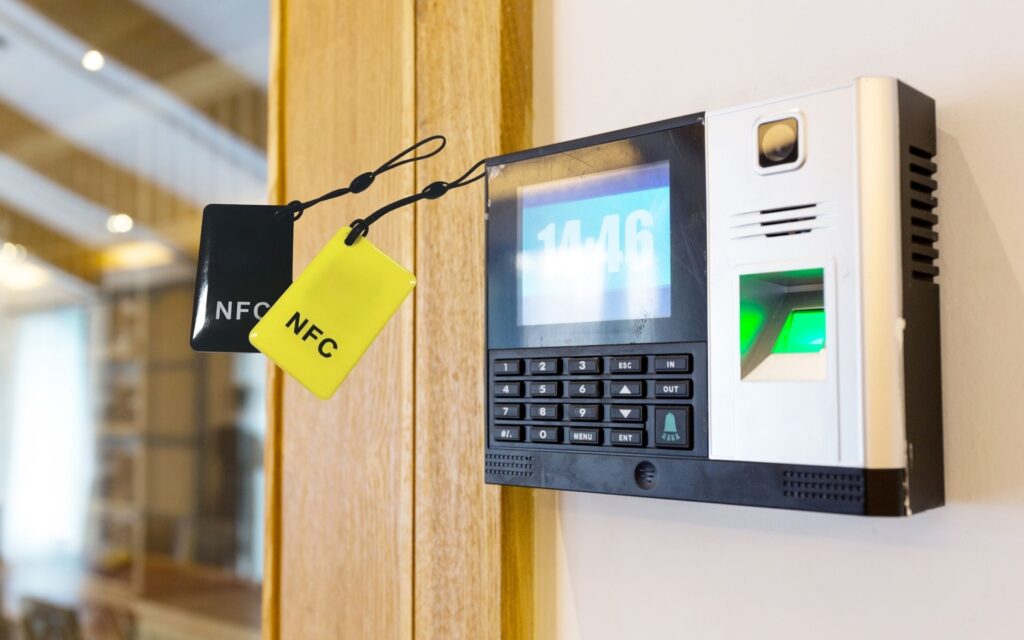
RFID stands for Radio Frequency Identification. It is a technology that uses radio waves to identify and track objects without direct contact.
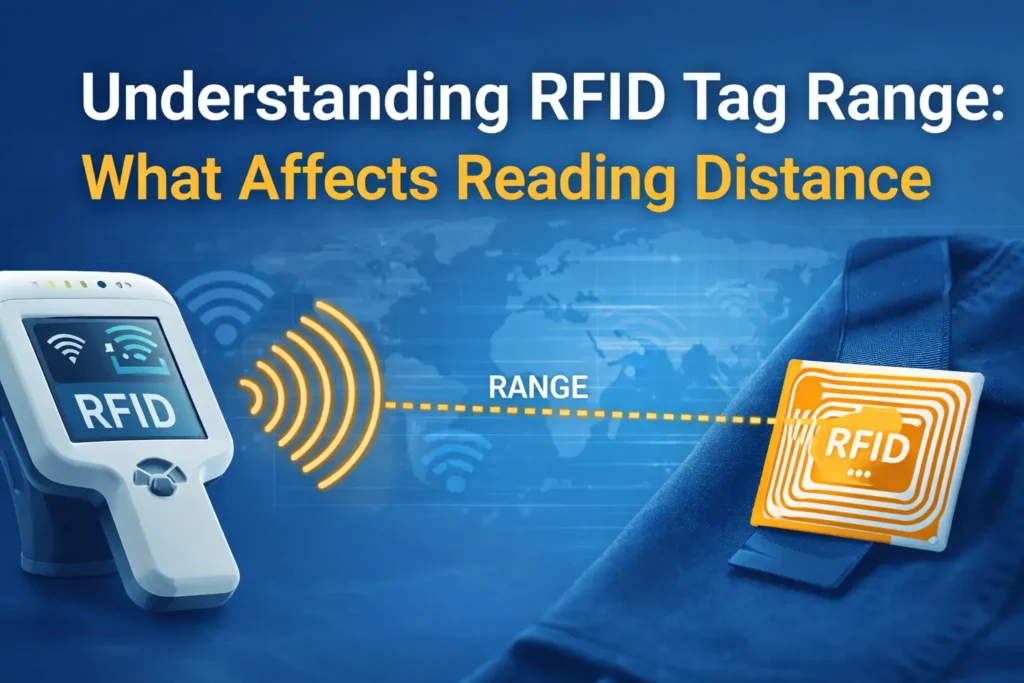
A basic RFID system has three main hardware parts. These are the RFID tag, the RFID reader, and the antenna. In real applications, the reader is usually connected to a backend system, such as a database or management software, where tag data is stored and processed.
The RFID tag attaches to the item that needs to be tracked and consists of an antenna and a microchip.
An RFID tag reader acts as the central ground for communication in the system. It emits radio signals, which the tag’s antenna receives and sends to the microchip. When it receives the signals, the microchip transmits data back to the reader. An RFID tag reader thus functions in a release-and-receive loop of signals and information.
Afterward, the backend system interprets the data from the reader and stores it in a database for later use.
Moreover, unlike barcodes, RFID does not require a clear line of sight. The tag does not need to be visible to be read. This makes RFID useful in situations where items are moving, stacked, or hard to reach. For example, RFID can be used to scan livestock ear tags, track boxes on a conveyor belt, or identify people with access cards.
There are different types of RFID systems, but they all work on the same basic idea. The reader sends energy through radio waves, and the tag uses that energy to communicate. Some tags have their own battery, while others use the energy from the reader to work. Because RFID relies on radio signals, how far a tag can be read depends on factors like frequency, tag design, and surrounding materials. This is why understanding RFID range requires knowing how the technology works in real conditions, not just in theory.
What Is RFID Tag Reading Range
RFID tag reading range, also called reading distance, refers to how far an RFID reader can successfully detect and read a tag. In simple terms, it is the maximum distance between the tag and the reader where communication still works reliably.
This range is usually measured from the antenna of the reader to the antenna of the tag. Manufacturers often test it in controlled conditions, such as open space without interference. Because of this, the stated range normally represents the maximum possible distance, not the distance that will always be achieved in daily use.
There is also a difference between maximum range and working range. Maximum range means the farthest distance at which a tag can be read at least once under ideal conditions. Working range means the distance at which the tag can be read repeatedly and consistently. In real applications, the working range is usually shorter than the maximum range.
Significance of RFID Tag Range
RFID tag range directly affects how well an RFID system works in daily use.
If the reading distance is too short, the system may miss tags that should be detected. This can slow down work and force people to move items closer to the reader or scan them one by one. In places like farms, warehouses, or production lines, this reduces efficiency and increases labor.
Range also affects accuracy. When the reading distance is too long, the reader may pick up tags that are not meant to be scanned. For example, it may read tags from nearby animals, boxes, or people outside the target area. This can cause wrong records and make it hard to know which tag truly belongs to the current action. A suitable range helps limit readings to the correct area and reduces mistakes.
RFID range also affects system design and cost. Longer range usually requires stronger readers, larger antennas, or special tags. These can increase equipment cost and power use. Shorter range systems are often cheaper and easier to control, but may not work well in large spaces. For this reason, understanding RFID tag range is important before selecting tags and readers for any project.
Types of RFID Tags and Their Typical Ranges
RFID tags can be grouped in two different ways. One way is by frequency, such as LF, HF, and UHF. This describes what radio band the tag uses. Another way is by power source, such as passive, semi passive, and active. This describes whether the tag has its own battery or relies on the reader for power. These two classifications describe different aspects of the tag and can exist together.
In practical applications, LF and HF tags are almost always passive. Active and semi passive designs are mainly found in UHF systems because higher frequencies are better suited for longer range communication.
LF RFID tags (125 to 134 kHz)
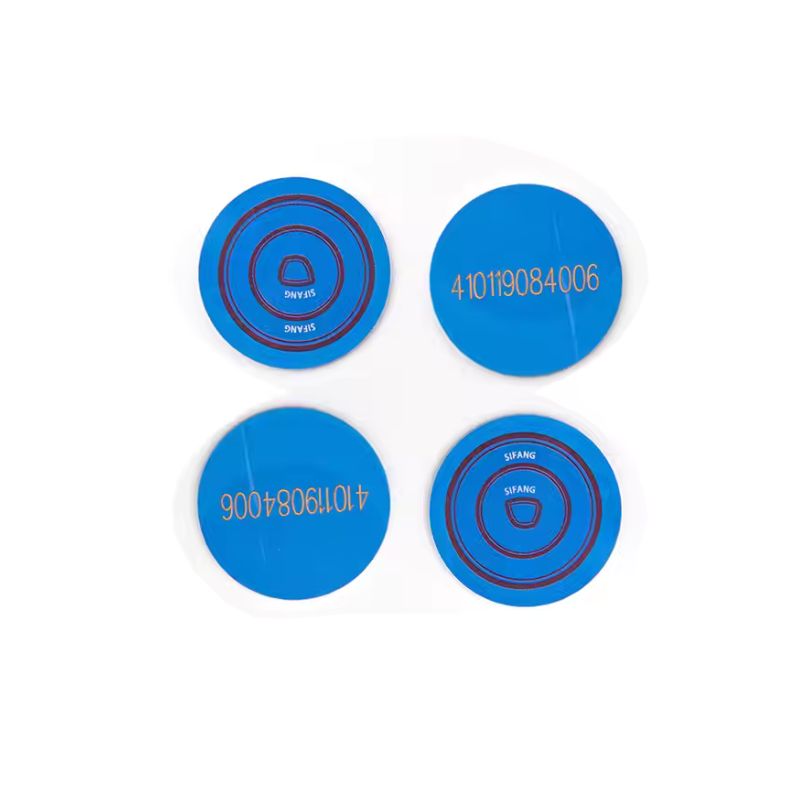
LF means low frequency. These tags are known for short reading distance and stable performance in tough environments.
In most real setups, LF tags are usually read at about 2 to 10 cm. With a well matched reader and a larger antenna, some systems can reach around 15 cm, but LF is still considered close range. This is why LF is common in animal identification, access systems that require close contact, and situations where you want to avoid accidental reads from nearby tags.
LF tags tend to perform more consistently near water and around living bodies compared with higher frequencies. That does not make the range longer, but it can make the range more reliable in livestock settings where the tag is attached to an animal’s ear and the environment is not clean or dry.
HF RFID tags (13.56 MHz)
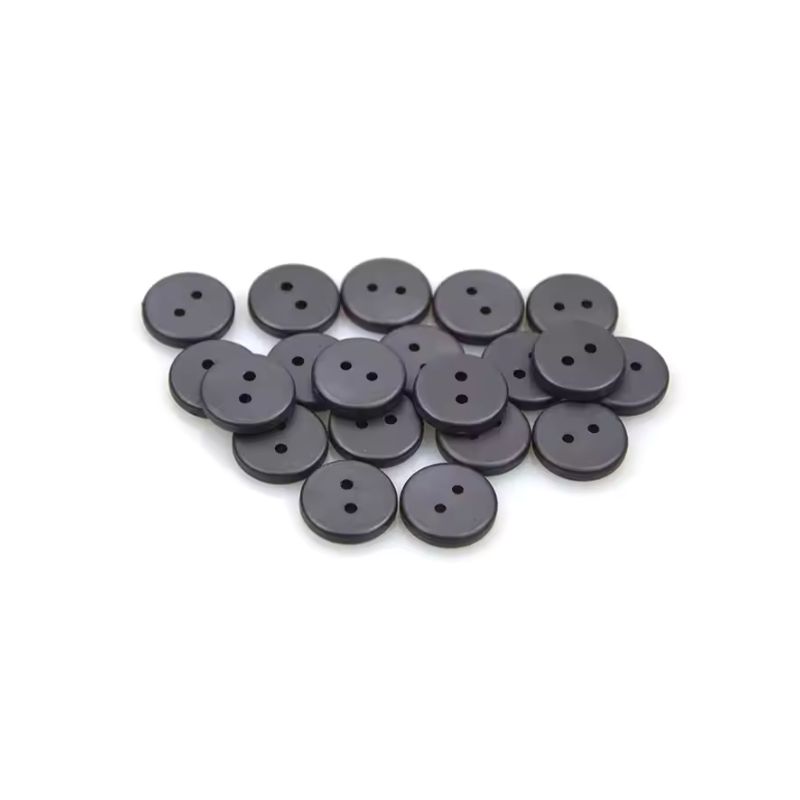
HF means high frequency. NFC is a well known subset of HF. HF tags usually have short range like LF, but they can support faster data exchange and are widely used in cards, ticketing, and item level tracking.
In real use, HF tags are most commonly read at about 3 to 10 cm. With a larger reader antenna and a tag designed for longer reach, HF can sometimes reach around 20 to 30 cm, but that is not the typical everyday setup. Most HF systems are intentionally designed to stay close range so that only one card or one item is read at a time.
UHF RFID tags (860 to 960 MHz)

UHF means ultra high frequency. This is the most common choice when people want longer reading distance using passive tags, especially for logistics, inventory, supply chain, and many livestock tracking systems that require a few meters of range.
Passive UHF tags (no battery powered)
The realistic working range of a passive UHF tag is often 1 to 6 meters, depending on the tag design and the reader setup. In good conditions with strong reader equipment and well designed tag antennas, passive UHF can reach around 7 to 10 meters, and sometimes more in clean open environments.
UHF is also the frequency where you will most often hear people talk about bulk reading, like scanning many items quickly. That ability is powerful, but it also means UHF systems can pick up more than you intended if the read zone is not controlled.
Active RFID tags (battery powered)
Active RFID tags have their own battery, so they do not rely on reader energy to power up. This allows much longer distances than passive tags. Active tags are used when long range, continuous monitoring, or real time location style tracking is needed.
Active tag range varies widely because there are different active technologies, but in many real deployments you may see tens of meters, such as 30 to 100 meters, and sometimes more with the right infrastructure and environment.
Active tags are typically larger, more expensive, and require battery replacement or battery life planning. They are commonly used for assets like vehicles, containers, tools, or high value equipment where long range detection is worth the cost.
Semi passive RFID tags (battery assisted passive)
You may also see semi passive tags, sometimes called battery assisted passive. These RFID tags use a battery to power the chip, but they still communicate using a backscatter style response like passive tags. The practical result is often more stable reading and sometimes longer distance compared to a similar passive tag, especially in difficult environments.
Ranges vary by product, but they usually sit between passive and fully active solutions. People use them when they need better reliability than passive tags but do not want the cost and size of fully active tags.
| RFID type | Frequency band | Power type in practice | Typical working range | Common use cases |
| LF RFID | 125 to 134 kHz | Passive | About 2 to 10 cm | Animal ID, access control, close contact identification |
| HF RFID | 13.56 MHz | Passive | About 3 to 10 cm, sometimes up to 20 to 30 cm | Cards, tickets, libraries, NFC applications |
| UHF RFID (passive) | 860 to 960 MHz | Passive | About 1 to 6 meters, up to 7 to 10 meters in good conditions | Logistics, inventory, livestock tracking, supply chain |
| UHF RFID (semi passive) | 860 to 960 MHz | Battery assisted | Usually longer and more stable than passive UHF | Cold chain, sensors, difficult environments |
| Active RFID | Usually UHF or higher | Battery powered | Around 30 to 100 meters or more | Vehicles, containers, high value assets |
How Frequency Affects RFID Tag Range
Frequency plays a major role in how far an RFID signal can travel and how it behaves in different environments. Lower frequencies and higher frequencies interact with materials like water, metal, and human or animal bodies in different ways, and this directly influences reading distance.
Lower frequencies such as LF use longer radio waves. These waves are more stable when they pass near water or living tissue, which is why LF tags are often used on animals or in access systems where the tag is very close to the reader. However, when the distance between the tag and the reader increases, the power sent to the tag drops quickly. Once a low frequency tag moves out of range, the radio energy it receives becomes too weak for the chip to respond. Because longer waves carry less usable energy for communication, LF systems naturally have a short reading range.
HF operates at a higher frequency than LF, which allows faster data transfer and smaller antennas. The signal still behaves well at short distances and is easy to control within a small reading zone. This makes HF useful for cards, tickets, and item level scanning where the tag is meant to be very close to the reader. Although HF can support a wider reading range than LF in theory, it is more sensitive to interference. Objects between the reader and the tag can block or weaken the signal more easily, which limits how far the tag can be read reliably.
UHF works at much higher frequencies and uses shorter radio waves. These waves can travel farther in open space and reflect more easily off surfaces. This makes UHF suitable for reading tags from several meters away and for scanning many tags at once. At the same time, shorter waves are more sensitive to interference from metal and water. This explains why UHF systems often need careful antenna placement and testing in real environments.
Frequency also affects how focused the reading zone can be. Lower frequencies tend to create a small and predictable field close to the antenna. Higher frequencies can create wider and more directional fields. This changes how the reader covers space and how easily it may detect tags outside the intended area.
Factors That Affect RFID Reading Distance (Other Than Frequency)
Even when two RFID systems use the same frequency, their reading distance can be very different. This is because many other elements influence how well the tag and reader can communicate. The factors below explain why range changes in real environments and why laboratory results do not always match daily use.
Power supply of the tag
RFID tags can be passive, semi passive, or active. Passive tags do not have their own power source. They rely entirely on the energy sent by the reader to activate the microchip and send data back. Because of this, their reading distance is naturally limited. As the distance between the tag and the reader increases, the power reaching the tag drops quickly, and the tag can no longer respond.
Active tags contain a battery that powers the chip and supports signal transmission. This allows them to communicate over much longer distances than passive tags. The tradeoff is that active tags are larger, more expensive, and require battery management. The way a tag is powered therefore has a direct impact on how far it can be read and how stable the communication will be.
Tag size and antenna design
The antenna inside the tag plays a major role in how much energy the tag can receive and how strong its response will be. Tags with larger or better designed antennas usually achieve longer and more stable reading distance. Very small tags often have shorter range because their antennas cannot capture as much energy from the reader.
The shape and layout of the antenna also matter. Some antennas are designed to work best when placed on flat surfaces, while others are tuned for curved or flexible materials. If the antenna is not well matched to the surface it is attached to, the effective range can drop even if the reader is strong.
Reader power and antenna type
The reader does more than receive data. It also supplies the energy that passive tags need to operate. A reader with higher output power and a well matched antenna can extend reading distance. The antenna connected to the reader also affects how the radio field spreads through space.
Antennas with a narrow and focused beam can send energy farther in one direction. This can increase range in that area, but it can also make the system more sensitive to interference from other readers or tags in the same direction. A wide beam antenna usually covers a shorter distance but creates a broader reading zone. The choice of antenna shape changes both distance and control of the read area.
Environment and surrounding materials
RFID tags are used both indoors and outdoors, in places as different as livestock fields and shopping centers. This means they are often exposed to materials that affect radio signals. Water and living tissue can absorb radio energy, while metal can reflect or block it. These effects can reduce reading distance or make it unstable.
Walls, floors, machinery, and shelves can also change how the signal travels. In open outdoor areas, range is often more predictable. In crowded indoor spaces with many objects, signals may bounce or weaken, leading to shorter or less consistent reading distance.
Tag orientation and movement
The angle between the tag antenna and the reader antenna affects how much signal is exchanged. When the antennas are well aligned, communication is stronger. When they are poorly aligned, the signal weakens and the range decreases.
Movement makes this more challenging. A tag that rotates, swings, or passes quickly through the reading zone may not remain in the best position long enough to be detected. This is common with animals, conveyor belts, and vehicles, and it explains why moving tags are sometimes harder to read than stationary ones.
Interference from other signals
RFID systems usually operate in environments where other radio devices and electrical equipment are present. Nearby RFID readers, wireless networks, or industrial machines can introduce background noise. This noise makes it harder for the reader to distinguish the tag’s response, which can shorten the effective reading distance even when the hardware itself is capable of more.
Together, these factors show that RFID reading distance is not controlled by a single parameter. It is shaped by how the tag is powered, how the antennas are designed, how the environment affects radio waves, and how the tag is positioned and moved. This is why real world testing is always more reliable than relying only on product specifications.
How to Optimize RFID Tag Range
Optimizing RFID tag range is mainly about reducing signal loss and improving consistency rather than simply trying to increase distance. The factors discussed earlier show that range is shaped by tag design, antenna setup, and the surrounding environment. In practice, optimization means addressing these elements so the system performs in a stable and predictable way.
This usually starts with keeping a clear path between the tag and the reader so the signal is not weakened by physical obstructions. Tag placement should avoid dense materials or metal parts that block or absorb radio energy, and the tag antenna should be oriented so it aligns as well as possible with the reader antenna.
Reader antennas should also be positioned and aimed toward the area where tags are expected to appear, instead of spreading energy into unused space. In some environments, reflective materials or shielding can be used to guide the signal and limit interference from nearby metal structures. Power should be adjusted gradually and tested in real conditions, because higher power can enlarge the reading zone and cause unintended reads. In most cases, testing with real objects and real movement is the most reliable way to improve performance, since it shows how the system behaves in its actual working environment.
How to Choose the Right RFID Tag Range for Your Application
Consider the working distance and workflow
Choosing the right RFID tag range starts with how the system will be used in daily operations. The key question is how far the tag needs to be read to support the workflow. In close control tasks such as access control or item level scanning, a short and controlled range is usually required so that only one tag is detected at a time. In moving or large scale scenarios such as livestock handling, warehouse tracking, or vehicle identification, a longer working range is often needed so objects can be identified without stopping.
The movement of objects also matters. Tags on animals, pallets, or vehicles are not always facing the reader directly. This means the chosen range must allow for variation in position and speed, not just ideal alignment.
Match the range to the environment
The environment strongly affects what range is practical. Indoor spaces with metal shelves, machinery, and walls can weaken or distort signals. Outdoor areas may allow wider coverage but introduce weather, dust, and changing tag positions. Tags attached to curved surfaces, metal containers, or animal bodies behave differently from tags placed on flat plastic or paper labels.
Instead of choosing range based on product claims alone, it is more reliable to consider how signals will behave in the actual setting. A range that works well in open air may not work the same way in a factory, farm, or storage facility.
Balance efficiency and control
Range also affects how precise the system can be. A longer range improves efficiency by reducing the need for manual scanning, but it increases the chance of detecting tags outside the intended zone. A shorter range gives better control and reduces accidental reads, but it may slow down operations if objects must be brought close to the reader.
The suitable range is therefore a balance between coverage and accuracy. The correct balance depends on whether the priority is speed, precision, or a combination of both.
Relating range choice to RFID tag design
The range a system achieves is not only determined by the reader. It is closely linked to how the RFID tag is designed and how it is mounted. Antenna size, housing material, and attachment method all influence how well the tag performs within a certain distance. For many applications, standard tags may not provide stable results unless they are matched to the surface and environment.
For this reason, selecting RFID tags that are designed for the specific use case is an important part of choosing the right range. Tags built for different working distances and environments help ensure that range performance is practical and repeatable in real deployments.
Test in real conditions before final selection
No range decision should be made only on specifications. Testing with real objects, real movement, and real surroundings shows how the system behaves under operating conditions. This helps confirm whether the selected range supports the workflow and whether tag placement and reader positioning need adjustment.
Real world testing reduces the risk of missed reads, false reads, and unstable performance, and it ensures that the chosen RFID tag range truly fits the application instead of only matching a laboratory value.
Also, as a reliable B2B RFID tag manufacturer, we work directly with different industries and applications every day. If you already know your working distance and environment, we can recommend RFID tags designed for that range and application, so the system reaches the required distance consistently instead of only under ideal conditions. This helps avoid repeated testing with unsuitable tags and shortens the setup process.
How to Select a Compatible RFID Reader
Choosing the right RFID reader is just as important as choosing the right tag. Even a well designed tag will not perform properly if the reader is not matched to it. A compatible reader ensures that the required reading distance can be achieved in a stable and controllable way.
Match the reader frequency to the tag
The first requirement is that the reader must operate on the same frequency as the RFID tag. LF tags require LF readers, HF tags require HF readers, and UHF tags require UHF readers. A mismatch in frequency means the system will not work at all. Before comparing performance or features, frequency compatibility should always be checked.
Choose a reader type based on how it will be used
RFID readers are commonly available as fixed readers or handheld readers. Fixed readers are usually installed at gates, doors, or fixed scanning points and are used when objects pass through a defined area. Handheld readers are used when operators move toward the tag, such as when scanning animals, equipment, or items in storage.
The choice depends on the workflow. If tags move past a single point, a fixed reader is more suitable. If objects are scattered or mobile, a handheld reader provides more flexibility.
Consider reader power and antenna support
Reader output power affects how much energy is sent to the tag and therefore influences reading distance. Readers with adjustable power settings allow better control of the read zone. This makes it possible to increase range when needed or limit it to avoid reading unwanted tags.
Some readers have built in antennas, while others require external antennas. External antennas allow more control over direction and coverage area, which is useful for longer range or more complex environments. Built in antennas are simpler to install but usually provide shorter and less focused range.
Check environmental and installation requirements
Readers are used in many different environments, such as farms, warehouses, factories, and outdoor sites. Temperature, dust, moisture, and vibration can affect device reliability. A reader suitable for an office may not perform well in a barn or industrial area.
Installation conditions also matter. Space for mounting, cable length, and power supply all affect how the reader can be positioned. These factors influence how well the antenna can be aimed toward the tag and how stable the system will be over time.
Ensure the reader supports the required data handling
Beyond reading distance, the reader must be able to send data to the backend system in a usable form. This includes support for common communication methods such as Ethernet, serial, or wireless connections. The reader should also support the tag standard being used so that tag IDs are interpreted correctly.
A reader that reads tags well but cannot integrate smoothly with the software system will still create operational problems. Compatibility should therefore be considered at both the signal level and the data level.
Frequently Asked Questions
How far can RFID tags be read
The shortest read range of an RFID tag is about 10 cm. The tags with this range are low-frequency (LF) RFID tags. They operate within 30 to 300 kHz frequencies and have a slow read time. However, regarding interference, LF RFID tags have the least occurrence.
High-frequency (HF) RFID tags have a read distance of 10 cm to 1m. They function at frequencies between 3 to 300MHz, although many HF tags operate at 13.56MHz
Ultra-high frequency (UHF) RFID tags have the longest read range. In a passive tag, the tracking distance can reach 12 meters. On the other hand, with active tags, a UHF R
Does aluminum foil really block RFID
Aluminum foil can block or reflect RFID signals because it is metal. When a tag is fully covered by aluminum foil, the radio waves from the reader cannot reach the tag properly, and the tag cannot send a response back. This is why metal shielding is sometimes used to prevent unwanted reads. In practice, even thin layers of metal can significantly reduce reading distance, especially for UHF RFID systems.
Can RFID pass through walls
RFID signals can pass through some materials such as plastic, paper, and thin wood. However, concrete walls, metal panels, and thick building materials can weaken or block the signal. Water and dense objects can also absorb radio energy. This means RFID may work through light indoor partitions but usually does not work reliably through solid walls or metal structures.
Can cell phones detect RFID tags
Most smartphones can only read HF RFID tags using NFC. This works at very short distance, usually a few centimeters. Phones cannot read UHF RFID tags that are used for long range scanning in logistics, livestock, or asset tracking. To read those tags, a dedicated UHF RFID reader is required. A phone is therefore suitable for NFC style tasks but not for long range RFID applications.
What is the range of passive RFID tags
The range of passive RFID tags depends mainly on their frequency and antenna design. Passive LF and HF tags are typically read at very short distances, while passive UHF tags can be read from one to several meters in suitable conditions. Because passive tags rely on energy from the reader, their range is always limited compared with battery powered active tags.
Why is my RFID range shorter than the value in the datasheet
Datasheet values are usually measured in ideal conditions without obstacles. In real use, metal, water, and object shape can absorb or reflect radio signals. Tag orientation and movement also affect how much energy reaches the chip. As a result, the working range is often shorter than the maximum range listed by the manufacturer.