
RFID technology is widely used in modern tracking and identification systems. From retail inventory and access-control cards to warehouse asset tracking and industrial equipment monitoring, RFID helps automate data collection without direct contact or line-of-sight scanning.
When researching RFID systems, one of the most common questions is the difference between active and passive RFID. While both technologies rely on radio-frequency communication, they differ significantly in power source, read range, cost, lifespan, and deployment strategy. These differences directly affect system design, infrastructure investment, and long-term operating costs.
This guide explains how passive and active RFID work, where each is typically used, and how to decide which option fits your application requirements.
What Is Passive RFID
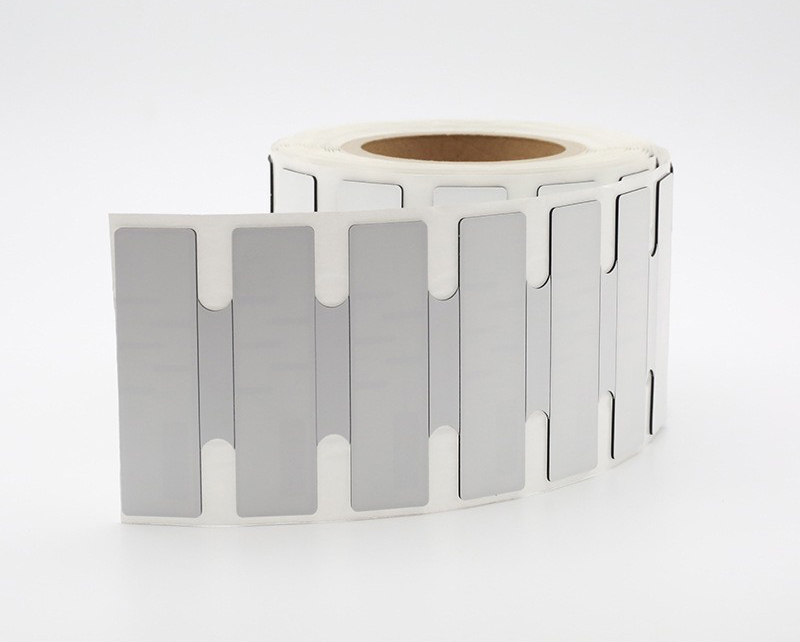
Passive RFID is a type of radio-frequency identification system in which the tag does not contain an internal power source. Instead of using a battery, a passive RFID tag is powered by the electromagnetic field emitted by an RFID reader. This design makes passive tags smaller, lower-cost, and maintenance-free compared to battery-powered alternatives.
How Passive RFID Tags Work
A passive RFID system consists of a reader, a reader antenna, and a passive tag. The reader generates an alternating electromagnetic field at a specific frequency. This field is transmitted through the reader antenna and creates an RF energy zone around it. Passive tags do not contain a battery, so they remain electrically inactive until they enter this RF field.
When a passive tag enters the field, the tag’s antenna intercepts the electromagnetic energy. In LF and HF systems, this energy transfer happens through inductive coupling, meaning the tag and reader antennas behave like loosely coupled coils in a transformer. In UHF systems, energy transfer occurs through electromagnetic wave propagation, where the tag antenna captures part of the radiated RF wave.
The captured RF energy induces a small current in the tag antenna. That current is rectified by a diode circuit inside the chip and converted into DC power. Once the voltage reaches the chip’s operating threshold, the integrated circuit powers up. At this point, the chip can execute its internal logic, access its memory bank, and prepare a response.
Passive RFID tags do not generate their own RF signal. Instead, they communicate using a technique called backscatter modulation. The chip rapidly switches the impedance of the antenna between two or more states. These impedance changes slightly alter how the tag reflects the reader’s RF signal. The reader detects these subtle changes in the reflected wave and interprets them as binary data.
The data transmitted can include a unique identifier, user memory content, or protocol-specific control information. In UHF EPC systems, for example, the tag stores data in structured memory banks such as the EPC memory, TID memory, and optional user memory. The communication between reader and tag follows a defined air-interface protocol that controls timing, anti-collision procedures, and data encoding.
Because the tag depends entirely on harvested energy, several factors affect performance: distance from the reader, orientation of the antenna relative to the reader field, environmental interference from metal or liquids, and antenna design efficiency. If the tag does not receive sufficient power, it cannot activate, and communication fails.
Frequencies Used in Passive RFID
Passive RFID operates in three primary frequency ranges: Low Frequency, High Frequency, and Ultra-High Frequency. The operating frequency fundamentally determines how energy is transferred, how data is transmitted, how far tags can be read, and how the system behaves around materials such as metal and water.
Low Frequency, LF at 125 kHz or 134.2 kHz
LF systems operate in the near-field region and use inductive coupling between the reader antenna and the tag antenna. The reader generates a magnetic field, and the tag coil captures energy through magnetic flux linkage. Because the wavelength at 125 kHz is very long, the practical read range is short, typically a few centimeters to about 30 centimeters.
LF performs relatively well around water and biological tissue because magnetic fields are less affected by high-dielectric materials. That is why LF is widely used in animal identification, livestock ear tags, and access-control tokens. However, data rates are low, and multi-tag reading capability is limited compared to UHF systems.
High Frequency, HF at 13.56 MHz
HF also operates using near-field inductive coupling, but at a higher frequency. The shorter wavelength allows for smaller antennas compared to LF. Typical read range is up to 10 to 30 centimeters, depending on antenna size and reader power.
HF supports higher data rates than LF and is commonly used in smart cards, NFC devices, ticketing systems, and library management. Because it still relies on magnetic coupling, HF is more tolerant of water and human body proximity than UHF, but performance can degrade near large metal surfaces unless shielding or special design is used.
Ultra-High Frequency, UHF at 860 to 960 MHz
UHF passive RFID operates in the far-field region and uses electromagnetic wave propagation rather than purely magnetic coupling. The tag antenna captures energy from radiated RF waves, and communication relies on backscatter reflection of those waves.
Because UHF uses far-field propagation, it can achieve significantly longer read ranges, commonly 3 to 10 meters in standard systems, and even longer with optimized reader power and antenna design. UHF also supports faster data rates and more efficient anti-collision protocols, making it suitable for reading many tags simultaneously.
However, UHF performance is more sensitive to environmental factors. Water absorbs UHF energy, and metal reflects and detunes antennas. For this reason, specialized designs such as metal-mount tags or tuned dipole structures are required for reliable operation in industrial environments.
Types of Passive RFID Tags: Inlays and Hard Tags
Passive RFID tags are generally divided into two main form factors: inlays and hard tags. The difference is not in frequency or chip type, but in physical construction, protection level, and intended environment.
RFID Inlays
An RFID inlay is the most basic form of a passive RFID tag. It consists of a microchip bonded directly to a thin antenna, typically etched or printed on aluminum or copper. This chip-and-antenna assembly is mounted on a flexible substrate, usually PET plastic.
There are two common inlay types: dry inlays and wet inlays. A dry inlay is simply the chip and antenna attached to a substrate without adhesive backing. A wet inlay includes adhesive and a release liner, making it ready to be converted into a label.
Inlays are designed to be embedded into labels, packaging, or paper products. They are thin, lightweight, and cost-effective, making them ideal for retail inventory, supply-chain tracking, carton-level tagging, and pallet labels. Because they have minimal physical protection, inlays are best suited for controlled environments where mechanical stress, moisture, or chemicals are not severe.
A key advantage of inlays is scalability. They are produced in high volumes using roll-to-roll manufacturing, which reduces cost per unit significantly. However, the exposed antenna structure means performance can be affected by bending, moisture exposure, or proximity to metal unless specifically engineered.
RFID Hard Tags
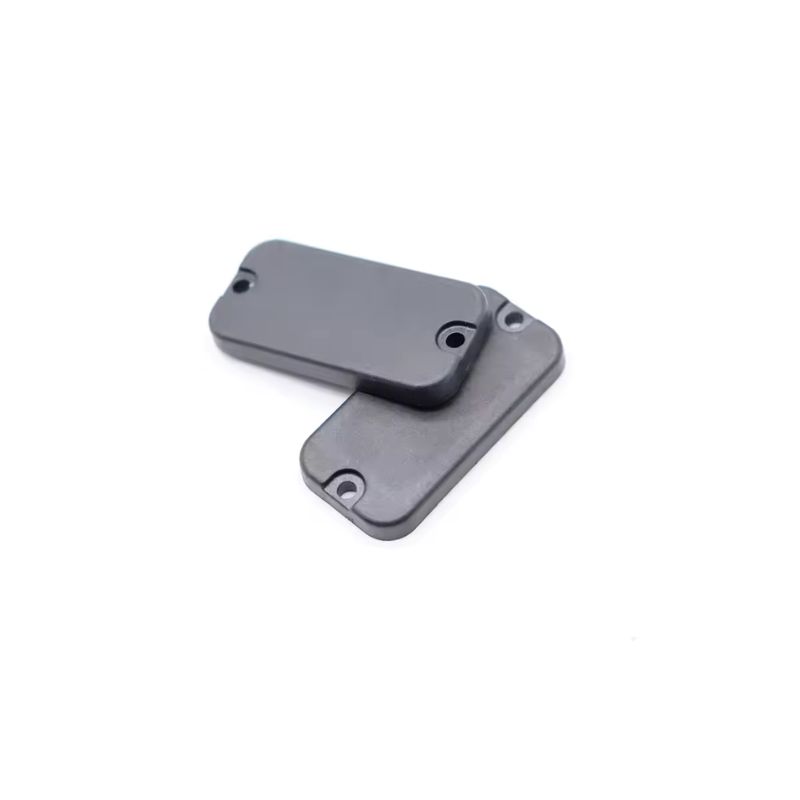
Hard tags are passive RFID tags enclosed within a protective housing made of plastic, ABS, epoxy, ceramic, or other durable materials. Inside the housing is still a standard chip-and-antenna structure, but it is mechanically protected and often tuned for specific mounting conditions.
Hard tags are used when environmental durability is critical. They are designed to withstand vibration, impact, UV exposure, chemicals, washing cycles, high temperature, or outdoor weather conditions. Some are ultrasonically sealed or epoxy-filled to achieve water resistance or even IP-rated protection.
Hard tags also vary by mounting method. Some include screw holes, zip-tie slots, adhesive pads, or rivet points. Others are designed to be embedded into equipment during manufacturing. In metal-heavy environments, specialized metal-mount hard tags include a spacer or tuned antenna design to isolate the antenna from conductive surfaces and prevent detuning.
Compared to inlays, hard tags are thicker and more expensive, but they provide mechanical reliability and consistent read performance in industrial conditions.
Advantages of Passive RFID
- No internal battery, maintenance-free operation
- Long operational lifespan if physically intact
- Low cost per tag, suitable for high-volume deployment
- Small and lightweight form factor
- Thin enough for labels, cards, and packaging integration
- Scalable manufacturing using roll-to-roll production
- Supports multi-tag reading with anti-collision protocols
- No battery-related failure risks
- Suitable for harsh temperature conditions where batteries would degrade
Disadvantages of Passive RFID
- Limited read range compared to active RFID
- Dependent on reader-generated power
- Performance affected by metal and liquid interference, especially in UHF
- Orientation-sensitive read performance
- Lower signal strength than active systems
- Cannot initiate communication independently
- Limited processing capability due to power constraints
Applications of Passive RFID
- Retail inventory management
- Supply-chain and logistics tracking
- Warehouse pallet and carton identification
Access-control cards and ID badges - Library book tracking
- Asset tracking in controlled environments
- Livestock identification and ear tagging
- Laundry management systems
- Tool and equipment tracking
- Ticketing and contactless payment systems
What Is Active RFID
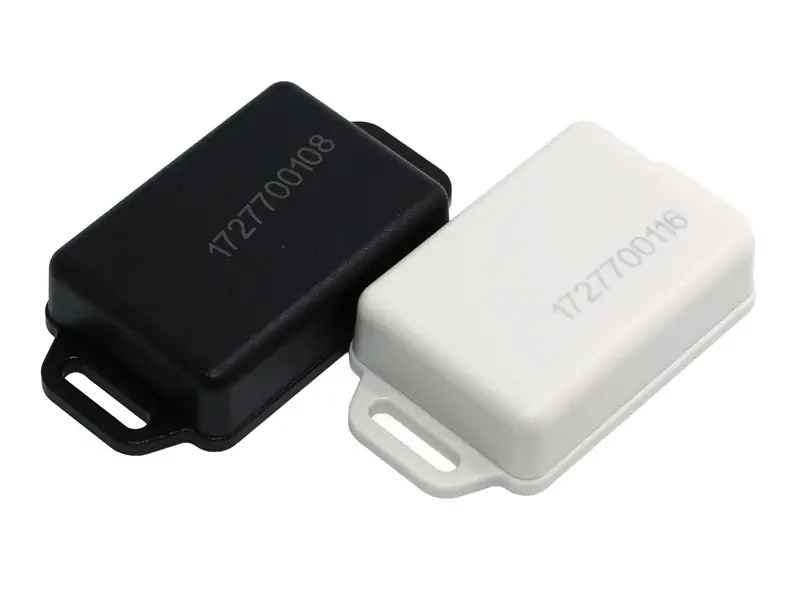
Active RFID is a radio-frequency identification system in which the tag contains an internal power source, typically a battery. Unlike passive tags that rely on reader-generated energy, active tags use their own battery to power the microchip and transmit signals. This fundamental difference allows active RFID systems to achieve longer read ranges and stronger signal output.
Because the tag has its own power source, it does not need to wait to be energized by a reader. Depending on the design, an active tag may periodically broadcast its signal or remain in a low-power state until triggered by a reader.
How Active RFID Tags Work
An active RFID tag contains a battery, a microcontroller-based integrated circuit, and a radio transmitter connected to an antenna. Unlike passive tags that depend on energy harvested from a reader, active tags use their internal battery to power both their logic circuitry and RF transmission stage.
When the tag is operating, the battery supplies stable DC power to the internal electronics. This allows the tag to run continuously or according to programmed intervals. Inside the tag, the microcontroller manages memory access, timing control, transmission cycles, and in some designs, sensor data acquisition.
Active tags communicate by generating their own RF signal. Instead of reflecting a reader’s field through backscatter, the tag actively modulates and transmits a carrier wave. This signal contains the tag’s unique identifier and any additional stored data. Because the signal is generated by the tag itself, it is significantly stronger than passive backscatter signals, which allows much longer communication distances.
Signal propagation in active RFID typically occurs in the far-field region. The reader receives the tag’s transmitted signal through its antenna, processes it, and decodes the embedded data. Because the tag is actively transmitting, the reader does not need to generate a strong energizing field, which allows coverage over wide areas with fewer power constraints compared to passive systems.
Battery capacity directly determines operational life. Depending on transmission interval, output power level, and environmental temperature, battery life may range from one year to five years or more.
The presence of a battery also allows active tags to support additional functions. Some designs integrate sensors such as temperature, motion, or humidity monitors. The internal controller collects sensor data and includes it in transmitted packets. This makes active RFID suitable for applications beyond simple identification, such as environmental monitoring and asset condition tracking.
Types of Active RFID Tags
Active RFID tags can be classified based on how they communicate and how their internal power is used. The main architectural distinction is between beacon tags and transponder tags, though some systems combine elements of both.
Beacon Tags
Beacon tags transmit data at predefined time intervals without waiting for a reader command. The transmission interval can be configured depending on the application, such as every second, every few seconds, or at longer intervals. Each transmission typically includes the tag’s unique identifier and may also include status data such as battery level or sensor readings.
Because beacon tags broadcast autonomously, they are commonly used in wide-area monitoring systems where continuous visibility is required. The reader infrastructure acts primarily as a receiver, collecting periodic transmissions from multiple tags. In dense deployments, the system protocol manages transmission timing and channel access to reduce signal collisions between nearby tags.
Beacon architecture prioritizes consistent presence detection. However, more frequent transmissions increase power consumption, which directly affects battery life. Therefore, system design must balance update frequency with operational lifespan.
Transponder Tags
Transponder tags do not continuously broadcast. Instead, they remain in a low-power or sleep state until they receive a specific activation signal from a reader or wake-up device. Once activated, the tag powers its transmitter and sends its data response.
This design reduces unnecessary transmissions and conserves battery energy. It is suitable for controlled environments where communication occurs only when assets pass designated checkpoints or enter specific zones.
Transponder systems often rely on synchronized reader infrastructure. The reader sends a trigger signal, and the tag responds within a defined time window. Because transmission is event-driven rather than periodic, battery life can be significantly extended compared to high-frequency beacon operation.
Hybrid Active Tags
Some active RFID tags combine both behaviors. They may operate in periodic beacon mode under normal conditions but switch to event-based transmission when motion is detected or when triggered by infrastructure. These hybrid designs use internal logic to determine when to transmit, allowing more efficient energy use while maintaining situational awareness.
Hybrid systems are often used in applications where both periodic location updates and event-based alerts are required.
Sensor-Enabled Active Tags
Another classification is based on functional capability rather than communication behavior. Some active tags integrate environmental or motion sensors. The microcontroller collects sensor data and stores or transmits it according to programmed logic.
These tags may transmit only when sensor thresholds are exceeded, such as temperature excursions or vibration events. This event-driven architecture reduces redundant data transmission while still providing condition monitoring.
Operating Frequencies of Active RFID
Active RFID systems typically operate in higher frequency bands than passive LF or HF systems. The most widely used bands are around 433 MHz and 2.45 GHz, though some proprietary systems may use other regional allocations. The operating frequency influences signal propagation behavior, penetration characteristics, antenna size, interference profile, and regulatory constraints.
As mentioned above, active RFID operates in the far-field region. Because the tag generates its own RF signal, communication relies on electromagnetic wave propagation rather than inductive coupling. In far-field systems, wavelength becomes an important design parameter. For example, at 433 MHz the wavelength is significantly longer than at 2.45 GHz, which affects antenna length, radiation pattern, and how the signal interacts with obstacles.
Systems operating around 433 MHz generally offer stronger penetration through walls, shelving, and certain non-metallic materials. Lower frequencies tend to experience less attenuation through solid objects compared to higher microwave frequencies. This can improve reliability in environments with partitions or stacked inventory.
Systems operating around 2.45 GHz use a shorter wavelength. Shorter wavelengths allow smaller antenna structures and can support higher data rates. However, higher frequencies are more susceptible to absorption by water-containing materials and may experience greater signal attenuation in cluttered environments.
Frequency also affects multi-path behavior. In indoor industrial spaces, RF signals reflect off metal surfaces, floors, and machinery. The resulting reflections can either enhance or degrade reception depending on phase alignment and antenna placement. System design must account for these propagation effects when planning reader infrastructure.
Another critical factor is regulatory compliance. Active RFID operates within specific license-free industrial, scientific, and medical bands defined by regional authorities. Transmit power limits, channel bandwidth, and duty cycle restrictions vary by country. System designers must ensure that both tags and readers operate within permitted emission limits.
Advantages of Active RFID
- Long communication range compared to passive RFID
- Strong signal transmission independent of reader energy
- Can initiate communication autonomously
- Suitable for real-time location tracking across large areas
- Supports sensor integration such as temperature, motion, or humidity
- Less dependent on precise antenna orientation
- Can operate in wide-area coverage with fewer readers
- Enables continuous visibility of moving assets
- Capable of transmitting status data such as battery level
Disadvantages of Active RFID
- Higher cost per tag due to battery and transmitter components
- Larger physical size compared to passive tags
- Limited operational lifespan determined by battery capacity
- Requires battery monitoring and replacement planning
- More complex infrastructure planning
- Potential signal congestion in dense deployments
- Higher total system investment
- Environmental temperature can impact battery performance
Applications of Active RFID
- Real-time location systems in warehouses and factories
- Vehicle and yard management tracking
- Container and trailer monitoring in logistics hubs
- High-value asset tracking in industrial facilities
- Personnel tracking in restricted or hazardous areas
- Cold-chain monitoring with sensor-enabled tags
- Equipment utilization monitoring
- Large campus or hospital asset visibility systems
- Mining and construction site asset tracking
- Emergency response and evacuation tracking systems
Active vs Passive RFID: Key Differences Summary
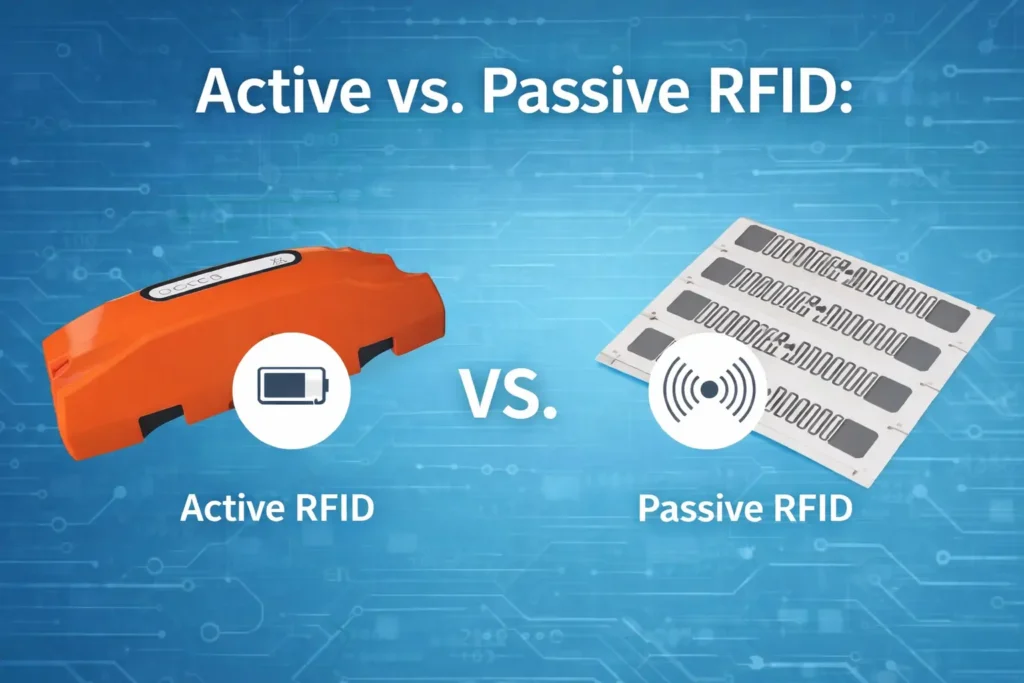
The core differences between active and passive RFID lie in power architecture, communication method, range capability, system scale, and lifecycle cost. The table below outlines these technical and operational distinctions.
| Parameter | Passive RFID | Active RFID |
| Power Source | No internal battery. Powered by reader RF field (energy harvesting) | Internal lithium battery powers chip and RF transmitter |
| Communication Method | Backscatter modulation of reader signal | Tag generates and transmits its own RF signal |
| Typical Read Range | LF: up to 30 cmHF: up to 30 cmUHF: 3 to 10 meters (standard systems), up to 15 meters optimized | 30 to 100 meters typicalOver 200 meters possible in open environments |
| Signal Output Power | No active transmission. Reflected signal typically in microwatt range | Transmit power typically 0 dBm to +20 dBm depending on design |
| Battery Life | Not applicable | 1 to 5 years typical depending on transmission interval |
| Tag Size | Can be label-thin, less than 1 mm for inlays | Typically several millimeters thick due to battery enclosure |
| Cost Per Tag | Approx. $0.10 to $5 depending on frequency and form factor | Approx. $10 to $50+ depending on features and sensors |
| Infrastructure Requirement | Requires reader power to energize tags | Readers mainly act as receivers; no energizing field required |
| Multi-Tag Reading | UHF supports hundreds of tags per second using anti-collision protocols | Depends on channel access protocol; dense beacon systems require timing management |
| Memory Capacity | EPC memory typically 96 to 512 bits; optional user memory up to a few kilobytes | Often larger memory; may store logs or sensor data |
| Maintenance | No battery replacement required | Battery monitoring and replacement required |
| Typical Use Scale | Item-level tagging, high-volume deployment (thousands to millions of tags) | Asset-level tracking (hundreds to thousands of assets) |
| Environmental Sensitivity | UHF affected by metal and water; requires metal-mount design | Less dependent on reader power but still subject to RF absorption and reflection |
| Data Update Frequency | Only when within reader field | Periodic transmission (for example every 1 to 10 seconds) or event-triggered |
Conclusion
Active and passive RFID are designed for different types of tracking needs. Passive RFID works best when you need low-cost tags in large quantities and minimal maintenance. Active RFID is better when you need longer range, continuous visibility, or added features like sensors. The right choice depends on how far you need to read, how many items you are tracking, and how much infrastructure you plan to build. Understanding these differences helps you choose a system that fits your real operating environment.
If you have any questions about active or passive RFID, or if you are looking to purchase active or passive RFID tags, please leave a comment below or contact us directly.